

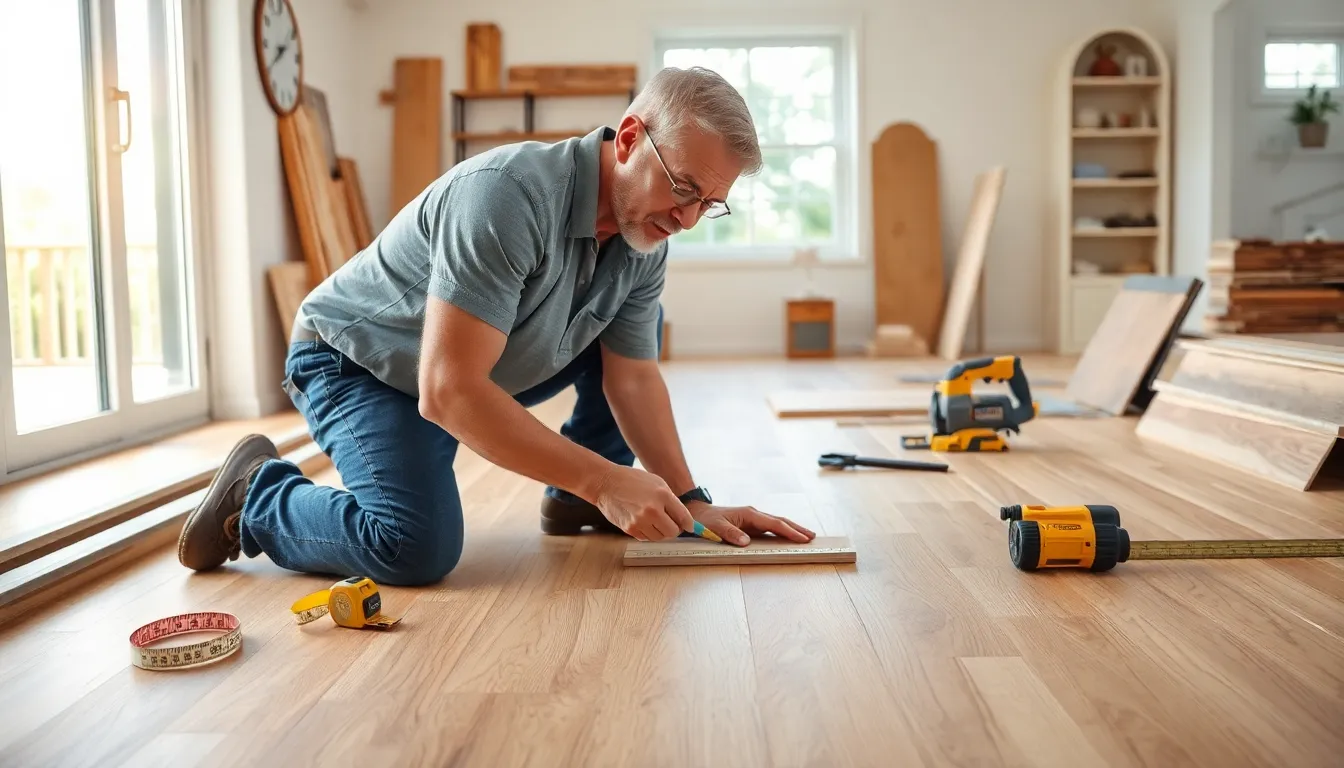
When it comes to flooring installation, many people think it’s just about slapping down some boards and calling it a day. But let’s be real—it’s a bit like trying to assemble IKEA furniture without the instructions. One misstep and you could end up with a floor that’s more wobbly than a three-legged table at a family reunion.
Types Of Flooring Materials
Selecting the right flooring material involves understanding various options available. Each type offers unique benefits and aesthetic contributions, influencing the overall look and functionality of a space.
Hardwood Flooring
Hardwood flooring consists of solid wood planks made from trees like oak, maple, and cherry. This material provides durability and timeless elegance. Installers prefer hardwood for its long lifespan and ability to be refinished multiple times. Oak, commonly harvested, offers a variety of finishes, enhancing its versatility. Maintenance involves regular sweeping and occasional refinishing, ensuring its beauty for years.
Laminate Flooring
Laminate flooring replicates the appearance of wood or stone, composed of layers fused together. Cost-effectiveness stands out, making it a popular choice for budget-conscious homeowners. Various designs and patterns provide flexibility to suit different interior styles. Its resistance to scratches and fading adds to its appeal. While laminate is easy to install, it requires a moisture barrier in high-humidity areas for optimal longevity.
Vinyl Flooring
Vinyl flooring features a synthetic composition designed for high-energy environments. This material is waterproof, making it ideal for bathrooms and kitchens. A vast array of colors and designs allow homeowners to create personalized looks. Installation often involves a click-lock system, simplifying the process. Regular maintenance includes sweeping and occasional mopping for a clean finish.
Tile Flooring
Tile flooring includes options like ceramic, porcelain, and natural stone, known for their durability and aesthetics. Ceramic tiles frequently feature intricate designs, enhancing visual interest. Porcelain tiles, denser and more water-resistant, are suitable for both indoor and outdoor spaces. Natural stone tiles add a premium touch but require sealing for moisture protection. Installation typically involves adhesive and grout, ensuring a durable fit.
Flooring Installation Process
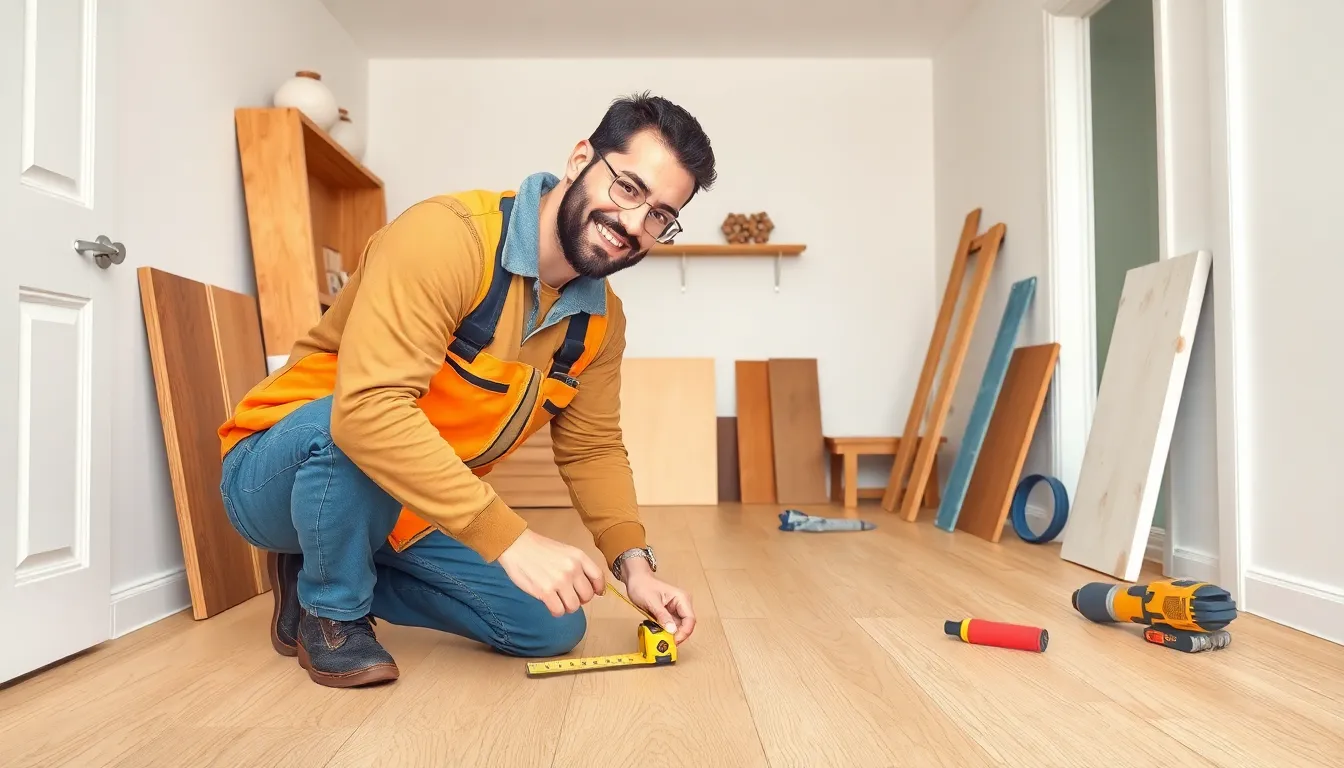
The flooring installation process involves several essential steps to ensure a successful outcome. Following a systematic approach guarantees that the final result is stable and aesthetically pleasing.
Preparation Steps
First, assess the subfloor for any damage or irregularities. A level subfloor ensures proper installation and longevity of the flooring. Next, gather necessary tools such as a measuring tape, saw, and adhesive. Many installers recommend acclimating the flooring materials at least 48 hours prior to installation to prevent expansion or contraction. It’s also vital to measure the space accurately to determine how much material is required. Additionally, remove any existing flooring and thoroughly clean the subfloor to ensure an optimal base for the new flooring.
Installation Methods
Options for installation methods vary based on flooring type. For hardwood, a nail-down method provides robust support, while glue-down applications work well for engineered wood and vinyl. Laminate flooring typically utilizes a floating method, allowing planks to interlock without adhesive. Meanwhile, tile flooring requires careful placement and even mortar application for stability. Each method necessitates precise measurement and cutting to accommodate edges and corners. Selecting the right installation method affects overall performance and durability of the flooring.
Tools Required For Flooring Installation
Proper tools are essential for successful flooring installation. They ensure accuracy and efficiency throughout the process.
Essential Tools
Measuring tape provides accurate dimensions. A chalk line helps visualize straight lines for cutting. Utility knives cut materials to size with precision. Additionally, a saw—either a circular or miter—facilitates clean cuts on planks. A pry bar removes baseboards and existing flooring effectively. Moreover, a floor roller helps secure adhesive for vinyl installations. Finally, a hammer, used for nailing down hardwood, is crucial for proper placement.
Optional Tools
Flooring gloves protect hands during installation. A knee pad supports comfort while kneeling. Jigsaws assist in making intricate cuts, especially around corners. Furthermore, a moisture meter detects subfloor moisture levels, alleviating future issues. A laser level ensures accuracy when laying down flooring. Regular flooring scraper aids in removing old adhesives efficiently. Consider these optional tools for enhancing the overall installation experience.
Common Challenges In Flooring Installation
Flooring installation presents several challenges that can affect the final outcome. Addressing these challenges proactively can lead to a more successful installation.
Uneven Subfloors
Uneven subfloors create significant obstacles during flooring installation. These imperfections can lead to gaps, uneven surfaces, and compromised stability. Before installation, it’s crucial to assess the subfloor for any damage or irregularities. Self-leveling compounds often serve as effective solutions, filling low spots and creating a smooth base. In some cases, additional underlayment materials may enhance cushioning and support. Ultimately, ensuring a level foundation contributes to a longer-lasting and visually appealing floor.
Fitting and Cutting Issues
Fitting and cutting issues arise frequently during flooring installation. Accurate measurements play a crucial role in achieving a proper fit. When cutting floorboards, miscalculations can lead to wasted materials and increased costs. Each flooring material requires specific cutting techniques for optimal results. For example, hardwood often necessitates miter saws, while laminate may require a circular saw. Furthermore, it’s essential to account for expansion gaps around walls and obstacles to allow for natural movement. Addressing these fitting and cutting challenges can lead to a flawless installation.
Benefits Of Professional Flooring Installation
Professional flooring installation offers several advantages that enhance both the process and the final results. Expertise significantly reduces the likelihood of mistakes during installation. Knowledgeable installers understand the complexities of various flooring materials and installation methods.
Time savings represent another key benefit. Professionals complete the installation efficiently, avoiding delays that often accompany DIY attempts. Guaranteed workmanship further ensures that the flooring serves its intended purpose without early wear and tear.
Access to advanced tools and technology makes a significant difference. Professionals utilize specialized equipment that enhances precision, leading to a flawless finish. Besides this, they often source high-quality materials through established supplier relationships, ensuring long-lasting results.
Attention to detail cannot be overstated. Professionals meticulously measure and cut materials, minimizing waste. They also account for factors like humidity and temperature during installation, preventing future problems related to expansion and contraction.
Warranty coverage provides additional peace of mind. Many professional installers offer warranties on their workmanship. This coverage protects homeowners against any defects or issues that arise after installation.
Finally, hiring professionals frees up personal time for homeowners. Instead of dedicating weekends to flooring projects, they can focus on other priorities or enjoy leisure activities. This balance enhances the overall experience and satisfaction with the home improvement process.
Successful flooring installation is a blend of precision knowledge and the right tools. Understanding the unique characteristics of each flooring type and employing the appropriate installation method is crucial for achieving a durable and attractive result. While DIY enthusiasts may find satisfaction in tackling the project themselves, the expertise of professionals can significantly reduce the risk of errors and enhance the overall quality of the installation. With careful planning and attention to detail homeowners can transform their spaces and enjoy the benefits of beautiful flooring for years to come. Whether choosing hardwood laminate vinyl or tile the right approach makes all the difference.

