


Time can be a tricky little rascal, especially when you’re eagerly waiting for that magic moment of 3:13. Whether it’s the start of your favorite show, a meeting you can’t miss, or simply the time for a well-deserved snack break, knowing how long you’ve got left can feel like an eternity. But don’t worry, he’s got your back!
Understanding Time Calculations
Time calculations play a crucial role in daily life, helping individuals manage schedules and meet deadlines. Knowing how to compute the time until a specific hour enhances efficiency and reduces uncertainty.
What Is Time Calculation?
Time calculation involves determining the duration between two points in time. Often, this process requires converting hours and minutes into a uniform measurement, such as minutes or seconds. For example, calculating how many minutes remain until 3:13 entails subtracting the current time from 3:13. People regularly utilize time calculations for various purposes, including scheduling events and setting reminders.
Importance of Accurate Time Perception
Accurate time perception significantly impacts productivity and daily routines. Misjudging time can lead to tardiness or unwanted stress. Individuals that possess strong time calculation skills find it easier to navigate their schedules, ultimately fostering a sense of control. Many aspects of life rely on timely arrivals, such as meetings, appointments, and events. Understanding time helps reduce anxiety, as knowing how long until a specific moment provides clarity and focus.
How Long Until 3:13?
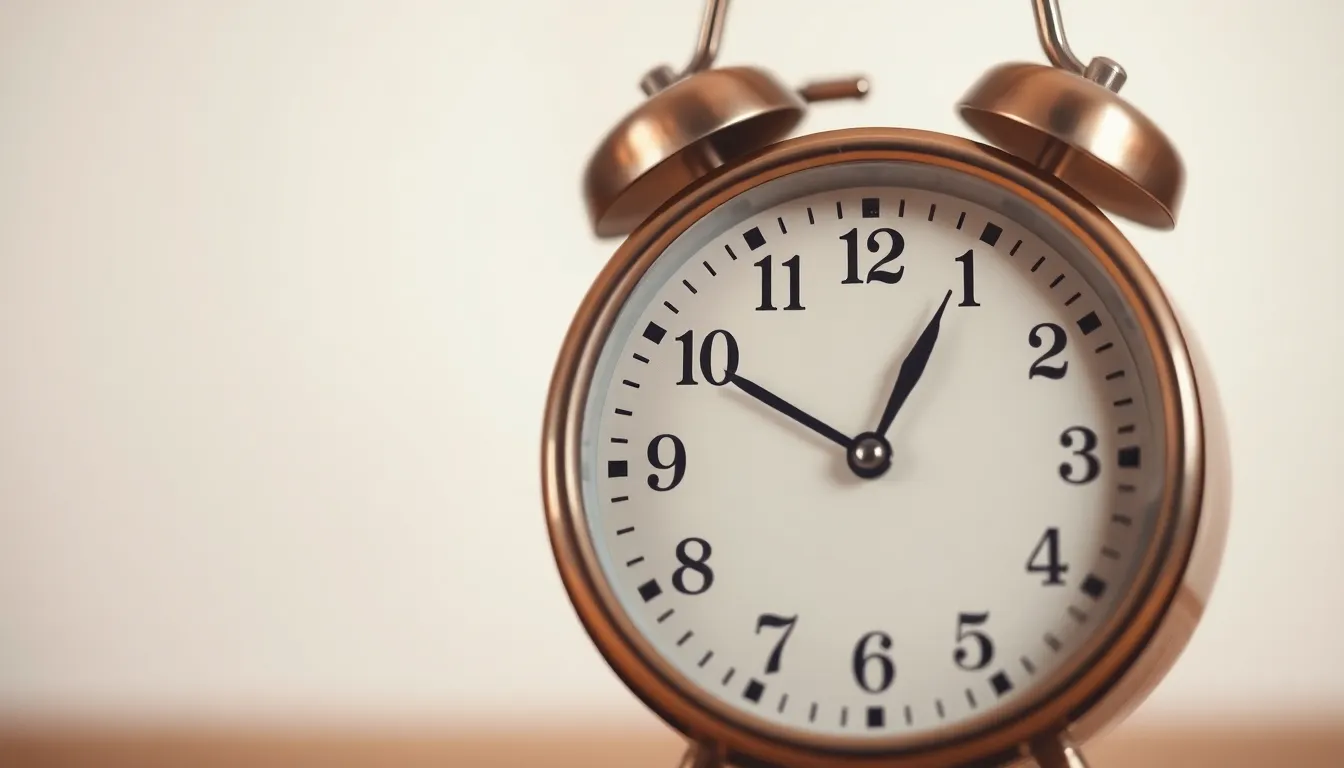
Understanding the duration until a specific time like 3:13 is essential for managing one’s schedule effectively. Accurate calculations promote better time management.
Determining the Current Time
Determining the current time is straightforward. Check the clock on your device for the precise hour and minute. If it’s a digital clock, it displays the time in a clear format. Analog clocks I can be read by noting the position of the hour and minute hands. This initial assessment ensures that you know how many minutes remain until 3:13.
Calculating the Time Difference
Calculating the time difference involves a simple subtraction. Subtract the current time from 3:13 to find out how many minutes are left. For example, if it’s 2:45, the calculation would be 3:13 minus 2:45, providing a total of 28 minutes. Adjusting this process is easy; just remember to convert hours into minutes when necessary. Taking note of each component enables better planning and minimizes anxieties related to impending events.
Practical Applications of Time Calculation
Understanding how long until 3:13 has several practical applications. Time management affects daily schedules and productivity.
Timing Events and Deadlines
Timing events requires precision. Identifying the duration until a meeting or appointment ensures punctuality. Planning around a deadline helps maintain focus and stability, reducing the risk of last-minute rushes. Knowing remaining minutes until a specific time can inform decisions regarding time allocation. Realizing that 30 minutes remain before 3:13 allows an individual to prioritize tasks effectively.
Time Management Techniques
Time management techniques enhance productivity. Setting clear goals aids in directing efforts toward completing essential tasks. Breaking down a schedule into manageable segments fosters a better understanding of time constraints. Implementing countdowns provides visual cues, reminding individuals of approaching deadlines. Utilizing calendars and timers creates structure, ensuring no task is overlooked. With these techniques, managing time until 3:13 becomes more feasible and less stressful.
Common Misconceptions About Time
Misconceptions about time can lead to inaccurate calculations and unnecessary stress. Understanding these can enhance time management and reduce anxiety.
How Time Zones Affect Calculation
Time zones introduce complexity into time calculations. They create differences in local time, which can lead to confusion during scheduling. For example, an event at 3:00 PM in New York occurs at noon in Los Angeles. People often forget to convert between time zones, resulting in missed appointments. Clarity about which time zone applies clarifies scheduling processes. When planning meetings or events, consider the participants’ locations for accurate time assessments. Effective communication ensures everyone is aware of the correct time, minimizing the potential for mistakes.
Mistakes People Make When Estimating Time
Estimating time can be challenging, as it often involves assumptions. One common mistake occurs when people underestimate the duration of tasks, thinking they’ll finish quickly. In addition, distractions can significantly extend time spent on various activities. Misjudging the time required for travel contributes to tardiness as well. Rushing often leads to a poor grasp of how long things actually take. By breaking tasks into smaller intervals, individuals can make more realistic estimates. Using timers or alarms also helps create a better understanding of how quickly time passes.
Understanding the duration until a specific time like 3:13 can significantly enhance one’s ability to manage schedules effectively. By mastering time calculations and utilizing practical techniques, individuals can reduce anxiety and improve productivity. Recognizing the importance of accurate time perception fosters a sense of control over daily routines and commitments.
Moreover, being aware of common pitfalls in time estimation can prevent unnecessary stress and tardiness. With these strategies in place, waiting for that anticipated moment can transform from a source of impatience into an opportunity for better planning and focus. Embracing these time management skills paves the way for a more organized and fulfilling daily life.

