


When it comes to height, the metric system can feel like a secret language, especially for those accustomed to feet and inches. Ever wondered how many centimeters are packed into a height of 5 feet 10 inches? Spoiler alert: it’s not just a simple math problem; it’s a journey into the world of conversions that could make a mathematician chuckle.
Understanding Feet and Inches
Individuals often find converting height measurements challenging when switching from the imperial system to the metric system. Feet and inches serve as common units of measurement in the United States, but this system differs from the metric equivalents.
The Imperial System Explained
The imperial system includes units like feet and inches. One foot equals 12 inches, where individuals usually measure height. Relying on this system, Americans often express height in feet and inches, using these units in everyday contexts. Understanding this system aids in grasping the height measurements commonly used in various settings, such as sports and personal identification.
Common Conversions
Common conversions from the imperial system to metric units facilitate understanding. For example, one inch equals 2.54 centimeters and one foot equals 30.48 centimeters. To convert a height of 5 feet 10 inches into centimeters, first convert feet and then inches. Performing the conversion leads to the realization that 5 feet 10 inches equals 177.8 centimeters, simplifying the process of height comparison across systems.
How Many Cm Is 5’10?
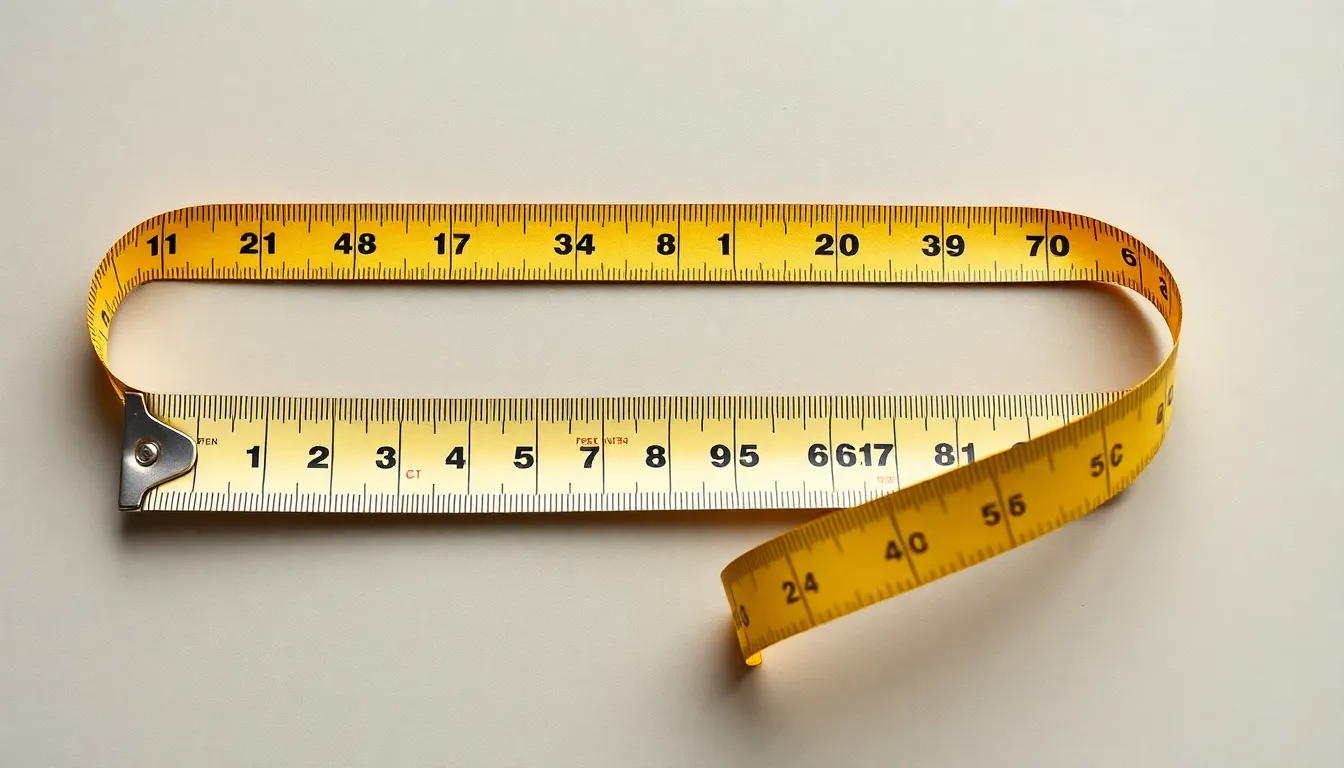
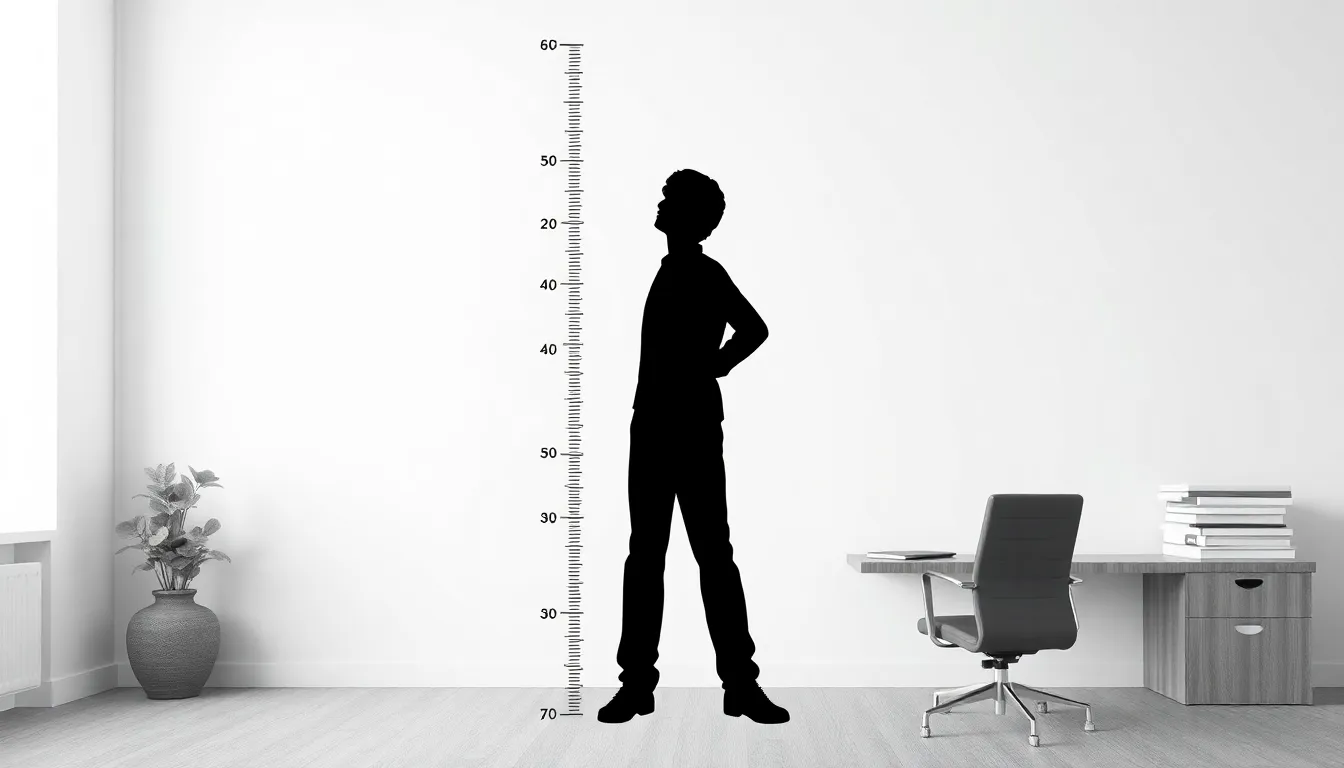
Converting 5 feet 10 inches into centimeters results in 177.8 centimeters. This transformation uses established conversion factors for accurate results.
Conversion Calculation
To find the height in centimeters, first convert feet and inches separately. One foot equals 30.48 centimeters, thus 5 feet equals 152.4 centimeters. Following this, one inch equals 2.54 centimeters, making 10 inches equal 25.4 centimeters. By adding both results together, 152.4 plus 25.4 equals 177.8 centimeters. This calculation provides a clear understanding of height in metric units.
Rounding Off for Simplicity
Rounding off to the nearest whole number simplifies communication of height. In this instance, 177.8 centimeters rounds to 178 centimeters. For practical purposes, this approach makes height easier to understand in casual conversation and various contexts. Rounding fosters a straightforward way to compare heights without sacrificing significant accuracy.
Practical Applications of Height Conversion
Understanding height conversions between imperial and metric systems plays a crucial role in various contexts. Height measurements impact athletic performance, medical evaluations, and social interactions.
Fitness and Health Considerations
Fitness assessments often rely on precise height measurements to calculate Body Mass Index (BMI) and determine fitness goals. Individuals who participate in weight loss programs or bodybuilding frequently convert their height to centimeters for accurate data analysis. Height influences exercise prescriptions and equipment selection as well. Personal trainers and health professionals use a person’s height to recommend suitable physical activities and monitor progress effectively. Accurate conversions from feet and inches enable these professionals to provide tailored advice based on individual metrics.
International Travel and Communication
Traveling abroad requires effective communication, including height conversion for various purposes. Airlines and travel agencies might request dimensions in centimeters for luggage requirements or seat assignments. Tourists communicating with locals, especially in sports or health contexts, benefit from understanding both measurement systems. For instance, an athlete meeting another athlete might discuss their height, necessitating a seamless conversion for clarity. Familiarity with height measurements in centimeters fosters better connection and understanding in diverse situations.
Common Height Comparisons
Height comparisons provide valuable context in understanding individual differences globally. These comparisons often highlight the diversity in average heights among various countries.
Average Heights in Different Countries
Countries exhibit varying average heights. For example, the Netherlands boasts an impressive average male height of approximately 183 cm, while Danish men average around 182 cm. In contrast, the average height for American men is about 177 cm, which reflects cultural and genetic factors influencing growth. Looking at women, Dutch women average around 170 cm, while American women tend to average about 163 cm. These differences highlight how geography and genetics can shape national averages.
Height in Relation to Other Measurements
Height relates to various measurements, offering a lens into physical health and fitness. Body Mass Index (BMI) calculations rely heavily on height, as they require both height and weight for accurate assessment. For instance, a person who stands 5 feet 10 inches tall typically needs to maintain a healthy weight range of 129 to 174 lbs to achieve a healthy BMI. Additionally, understanding height in the context of sports can enhance performance metrics, with athletes often classified by height and weight for specific events. Such considerations clarify the importance of height in health and athletic performance discussions.
Understanding the conversion of height from feet and inches to centimeters is essential in various contexts. A height of 5 feet 10 inches translates to 177.8 centimeters or 178 centimeters when rounded. This knowledge not only aids in personal identification but also plays a significant role in fitness assessments and athletic performance.
Height comparisons across different countries highlight the diversity in average heights, influenced by geography and genetics. By grasping these conversions and their implications, individuals can navigate social interactions and fitness goals more effectively. Height measurements bridge the gap between different measurement systems, fostering clearer communication in both everyday life and specialized fields.

