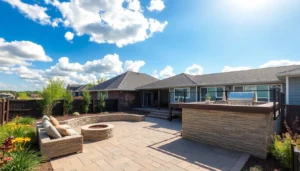

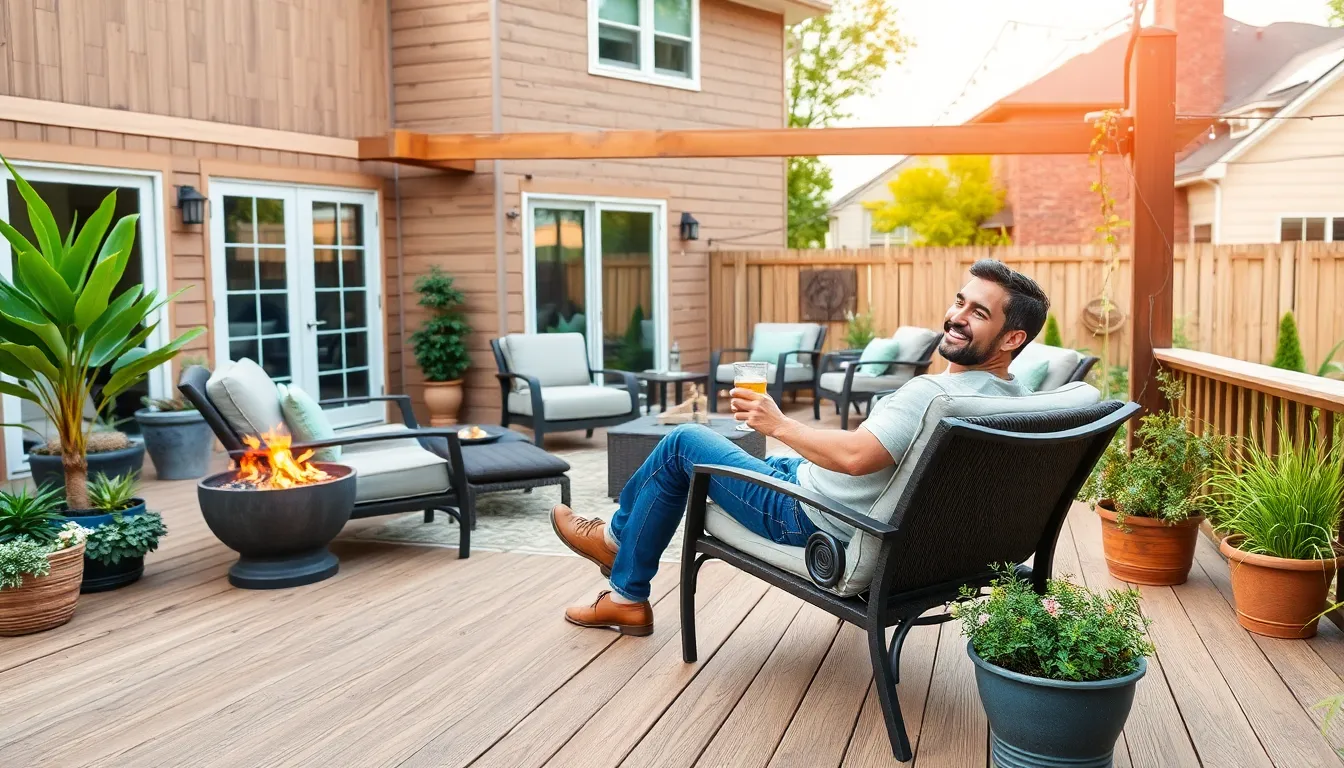
Imagine sipping your morning coffee while basking in the sun on your brand-new outdoor deck. Sounds dreamy, right? Outdoor decks aren’t just a home addition; they’re a lifestyle upgrade. They transform ordinary backyards into personal sanctuaries where relaxation and entertaining collide in perfect harmony.
But wait, there’s more! With the right deck, you can host barbecues that rival the best restaurants or simply enjoy a quiet evening under the stars. It’s like having a vacation spot right outside your door, minus the overpriced hotel fees. Whether it’s a cozy nook for reading or a spacious area for gatherings, outdoor decks offer endless possibilities. So, let’s dive into the world of decks and discover how to elevate outdoor living to a whole new level.
Overview of Outdoor Decks
Outdoor decks serve as functional extensions of living spaces, contributing to both aesthetics and usability. These structures come in various materials, including wood, composite, and aluminum, each offering unique benefits. Homeowners often choose timber for its natural appearance, while composites provide durability and low maintenance.
Factors such as size and layout significantly influence design choices as well. Typically, larger decks accommodate varied furniture arrangements, perfect for gatherings or quiet retreats. Multi-level designs create distinct areas for dining, sunbathing, and enjoying greenery.
Additionally, outdoor decks increase property value, appealing to prospective buyers seeking outdoor entertainment options. According to the National Association of Realtors, well-designed decks can return around 70 to 80 percent on investment when selling a home.
Weather-resistant features enhance usability throughout the year. Installations like built-in lighting, pergolas, or shade structures support comfort and enhance ambiance during day or night. Factors such as local climate influence material selection and deck orientation.
Deck accessories play a critical role in optimizing functionality. Furniture arrangements with ergonomic seating boost comfort during outdoor events. Comfy lounges or dining sets facilitate varied uses, from leisurely breakfasts to lively barbecues.
In terms of design elements, integrating plants, fire pits, or outdoor kitchens helps personalize space further. Finished areas provide a sense of cohesion while inviting guests to enjoy the experience. Whether for relaxation or celebration, outdoor decks transform backyards into vibrant outdoor living environments.
Benefits of Outdoor Decks
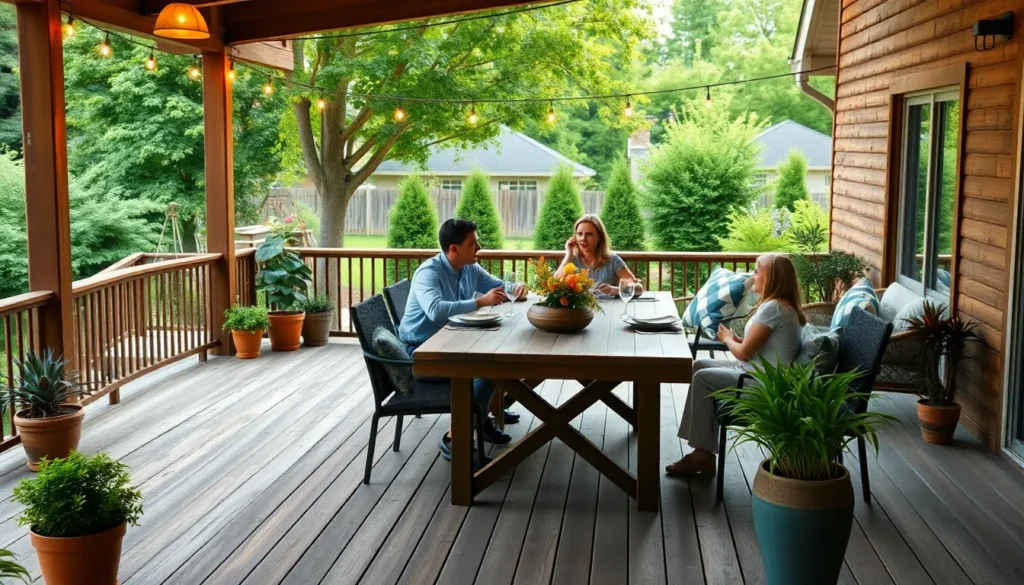
Outdoor decks provide significant advantages for homeowners, enhancing both lifestyle and property. They serve as versatile spaces, suitable for relaxation or entertaining guests.
Increased Outdoor Living Space
Outdoor decks expand usable living areas beyond interior walls. Homeowners enjoy outdoor dining experiences and gatherings more comfortably. Size matters; larger decks accommodate various furniture arrangements, fostering social opportunities. Multi-level decks create distinct sections, enabling different activities in one cohesive space. When families seek fresh air and open surroundings, decks provide cherished retreats close to nature.
Enhanced Property Value
Outdoor decks notably boost property value, attracting potential buyers. Well-constructed decks may return 70 to 80 percent on investment. Aesthetic appeal increases; prospective buyers often favor homes with inviting outdoor spaces. Buyers envision lively barbecues or tranquil evenings on these decks, enhancing desirability. Additionally, functional features like built-in lighting and weather resistance attract those looking for year-round enjoyment. The presence of a thoughtfully designed deck makes a property stand out in a competitive market.
Types of Outdoor Decks
Various outdoor deck types cater to different aesthetic and functional preferences. Homeowners can choose from wooden, composite, and PVC decks, each offering distinct characteristics.
Wooden Decks
Wooden decks provide a classic, natural look that enhances outdoor aesthetics. Common woods include cedar, redwood, and pressure-treated lumber, each contributing different colors and patterns. Durability varies, with pressure-treated options often exceeding 15 years with proper maintenance. Natural wood requires regular sealing and staining to protect against weather damage. Many homeowners appreciate the warm texture and feel of wood underfoot. Eco-conscious choices exist for sustainably sourced timber, enhancing environmental responsibility while beautifying spaces.
Composite Decks
Composite decks combine wood fibers and plastic, offering a low-maintenance alternative. These materials resist fading, scratching, and moisture, dramatically increasing lifespan compared to traditional wood. Homeowners enjoy a variety of colors and styles, allowing seamless integration into outdoor designs. Composite materials often come with warranties exceeding 25 years. Unlike wood, composite does not need staining or sealing, simplifying upkeep. Many products also feature slip-resistant surfaces, promoting safety in wet conditions. This type of decking appeals to those seeking eco-friendly options since many composites incorporate recycled materials.
PVC Decks
PVC decks consist entirely of polyvinyl chloride, delivering high durability and weather resistance. This material resists stains, mold, and mildew, making it ideal for diverse climates. Homeowners appreciate the minimal maintenance requirements; regular cleaning suffices for upkeep. Available in various colors and textures, PVC decks mirror the appearance of wood without the associated drawbacks. Most manufacturers offer warranties exceeding 30 years, ensuring long-lasting satisfaction. Lightweight attributes facilitate easy installation, making DIY projects more accessible. Innovative designs often include hidden fasteners, creating a sleek, seamless appearance.
Designing Your Outdoor Deck
Designing an outdoor deck involves careful planning and consideration. Effective layout contributes to both functionality and aesthetics.
Layout Considerations
Space availability dictates the overall deck design. Large yards accommodate expansive layouts, while smaller areas benefit from compact, efficient arrangements. Multi-level decks create visual interest and facilitate distinct zones for activities such as dining and lounging. Furniture placement impacts movement flow, ensuring easy access to essential areas. Integrating elements like planters or built-in seating enhances usability and brings nature into the design. Prioritize orientation to maximize sunlight and shelter from harsh weather.
Choosing the Right Materials
Material selection significantly affects durability and maintenance. Wooden decks deliver timeless charm but require regular upkeep to prevent deterioration. Composite options combine natural aesthetics with low-maintenance benefits, resisting moisture and fading effectively. PVC decks showcase exceptional durability, presenting a weather-resistant surface that demands minimal care. Consider environmental impact when choosing materials; some products utilize recycled components, promoting sustainability. Each option possesses unique features, helping homeowners select the best fit for their style and climate needs.
Maintenance Tips for Outdoor Decks
Outdoor decks require regular maintenance to stay in top condition and enhance their longevity. Consider these crucial maintenance tips to keep decks looking and functioning well.
Regular Cleaning
Cleaning decks on a routine basis prevents the buildup of dirt, mold, and mildew. Use a broom to clear debris and follow up with a pressure washer or a hose combined with mild soap. It’s essential to scrub stained spots with a brush for thorough cleaning. Aim to clean decks at least twice a year, ideally in spring and fall, to maintain their appearance and safety. During this process, inspect for any damages that might need attention. Regular cleaning not only supports aesthetics but also prolongs the life of deck materials.
Proper Sealing and Staining
Sealing and staining enhance the protection of wooden decks against moisture and UV rays. Applying a high-quality sealant every 2 to 3 years helps preserve the wood’s integrity. Before sealing, it’s vital to ensure the deck is clean and dry. Consider weather conditions; aim for dry days with mild temperatures for application. Staining improves aesthetics while offering added protection from the elements. Expect to apply stain every 3 to 5 years, depending on the type of wood and exposure. Regular maintenance in sealing and staining ensures the deck endures seasonal changes effectively.
Outdoor decks truly enhance the living experience by providing versatile spaces for relaxation and entertainment. They transform backyards into vibrant environments where families and friends can gather and create lasting memories. With a variety of materials available homeowners can choose options that suit their style and maintenance preferences.
The thoughtful design of a deck can significantly increase property value while offering a unique outdoor lifestyle. By incorporating functional elements and accessories homeowners can personalize their decks to reflect their tastes and needs. Regular maintenance ensures these outdoor spaces remain beautiful and inviting for years to come. Investing in an outdoor deck is not just about adding a structure; it’s about enriching everyday life.