

Table of Contents
ToggleA white office chair isn’t just a place to sit, it’s a design statement that can transform a cluttered workspace into a clean, professional environment. Whether you’re setting up a dedicated home office or carving out desk space in a bedroom corner, the right chair affects both productivity and posture. White chairs have surged in popularity for their ability to brighten tight spaces and complement nearly any decor scheme, from minimalist Scandinavian to industrial loft. But selecting one means balancing aesthetics with ergonomics, material durability, and honest maintenance expectations. This guide walks through the practical considerations for choosing a white office chair that won’t sag, stain, or leave you reaching for ibuprofen after a day’s work.
Key Takeaways
- A white office chair brightens cramped workspaces by reflecting light and pairs neutrally with any decor, making it ideal for home offices seeking both aesthetics and functionality.
- Ergonomic features like adjustable lumbar support, seat depth (16–20 inches), and pivoting armrests are essential for preventing posture-related strain during long work sessions.
- White upholstery demands honest lifestyle assessment—visible grime appears faster on light colors, requiring weekly dusting and immediate spot-cleaning of spills to maintain appearance.
- Choose upholstery materials wisely: avoid bonded leather (peels within 2–3 years), prioritize polyester with fluorochemical spill-resistant finish or mesh for durability and easy maintenance.
- Match your white office chair with warm wood tones for Scandinavian appeal or pair with matte black metal frames for industrial contrast, while ensuring adequate 5000K task lighting to prevent dingy appearance.
- Deep-clean every three months using upholstery steam cleaners and apply fabric protector spray twice yearly to extend lifespan and prevent yellowing or mold from humidity and environmental exposure.
Why Choose a White Office Chair for Your Home Workspace
White office chairs deliver visual benefits that darker upholstery can’t match in smaller or dimly lit rooms. Light-colored furniture reflects ambient and task lighting, making a 10×10-foot office feel less cramped than it would with charcoal or black seating. This is especially useful in basements or interior rooms without direct windows.
From a design perspective, white acts as a neutral anchor. It pairs cleanly with natural wood desks, powder-coated metal frames, or glass tops without competing for attention. Homeowners experimenting with bold accent walls, navy, forest green, terracotta, appreciate how white chairs prevent the room from tipping into visual chaos.
There’s also a psychological element. Studies on workplace environments suggest lighter tones can reduce eye strain and contribute to a sense of openness, which matters during long video calls or focused work sessions. A white executive office chair positioned against a gallery wall or beside floating shelves creates a cohesive, Instagram-ready backdrop, but the real payoff is functional: fewer distractions, better focus.
That said, white demands honesty about lifestyle. If you eat lunch at your desk daily, have pets that shed, or work in a dusty workshop, expect visible grime faster than you’d see on gray fabric. Choosing white is a deliberate trade-off, style and brightness in exchange for more frequent cleaning.
Types of White Office Chairs to Consider
Ergonomic White Office Chairs
Ergonomic models prioritize spinal health over aesthetics, though many now offer both. Look for adjustable lumbar support, either a built-in curve or a separate pillow that sits at the L4-L5 vertebrae level. Seat depth adjustment (the distance from the backrest to the front edge) ensures your thighs rest flat without pressure behind the knees: 16 to 18 inches works for most adults, but taller users may need 19 to 20 inches.
Armrests should adjust in height and width. Fixed arms force awkward shoulder positions, leading to tension headaches. A white office chair with arms that pivot or slide inward accommodates typing posture and side tasks like sketching or reading without constant repositioning. Mesh backs in white or off-white promote airflow, critical if your workspace lacks AC or sits in direct sun.
Casters matter more than most realize. Dual-wheel nylon casters (2-inch diameter) roll smoothly on low-pile carpet or hardwood without scarring. If you’re on vinyl plank or tile, verify the wheels are soft-tread to avoid scratches. Ergonomic chairs often include a tilt-tension knob: turning it clockwise increases resistance, which is helpful if you prefer a stationary seat during focused work.
Executive and Mid-Back Styles
Executive chairs emphasize presence and padding. They typically feature high backs (22 to 26 inches from seat to headrest), thick cushioning (2 to 3 inches of foam), and materials like bonded leather, genuine leather, or premium polyester blends. A white executive office chair in faux leather offers the easiest wipe-down maintenance, no conditioning sprays or special cleaners required.
Mid-back chairs (18 to 20 inches tall) suit users who lean forward frequently or prefer a less imposing silhouette. They’re lighter (often 25 to 35 pounds versus 40+ for executive models), making them easier to move between rooms or store when not in use. Many mid-back designs incorporate swivel bases with 360-degree rotation and pneumatic height adjustment via a gas lift cylinder, typically offering a 4 to 5-inch range.
Executive styles sometimes include tufted details, chrome-finish bases, or wood armrest caps. These design flourishes look polished in a home office styled with rustic charm, especially when paired with reclaimed wood shelving or vintage filing cabinets. Mid-back chairs lean modern, often appearing in design roundups on platforms like Design Milk, where minimalist lines and monochrome palettes dominate.
Key Features to Look for in a White Office Chair
Weight capacity is non-negotiable. Most standard office chairs support 250 pounds: heavy-duty models go to 300 or 350 pounds. Check the manufacturer’s spec sheet, not just the product listing. Exceeding the rated capacity voids warranties and accelerates frame failure, usually at the weld points connecting the seat pan to the base.
Upholstery material directly impacts longevity and cleaning frequency. Bonded leather (polyurethane layered over leather scraps) peels within two to three years under daily use, avoid it even though lower cost. Full-grain or top-grain leather ages better but requires conditioning every six months. Polyester fabric resists staining when treated with a fluorochemical finish (often labeled “spill-resistant” or “easy-clean”), though it’s harder to wipe down than vinyl.
Mesh is forgiving for visible dirt, but white mesh shows yellowing from UV exposure if positioned near south-facing windows. Consider UV-blocking curtains or shades if your chair will sit in direct sun more than two hours daily.
Gas lift certification ensures safety. Look for BIFMA (Business and Institutional Furniture Manufacturers Association) or SGS certification on the cylinder. Uncertified lifts have exploded under stress, rare, but documented. A certified Class 4 gas lift handles typical home office use (eight hours daily, five days weekly) for five to seven years before losing height-lock integrity.
Some models now include built-in cable management clips or zippered pouches on the backrest for phone chargers or USB hubs. These aren’t essential, but they reduce desk clutter and keep cords from tangling underfoot. On popular Amazon desk chair lists, features like these often distinguish budget picks from premium options.
How to Match a White Office Chair with Your Home Office Decor
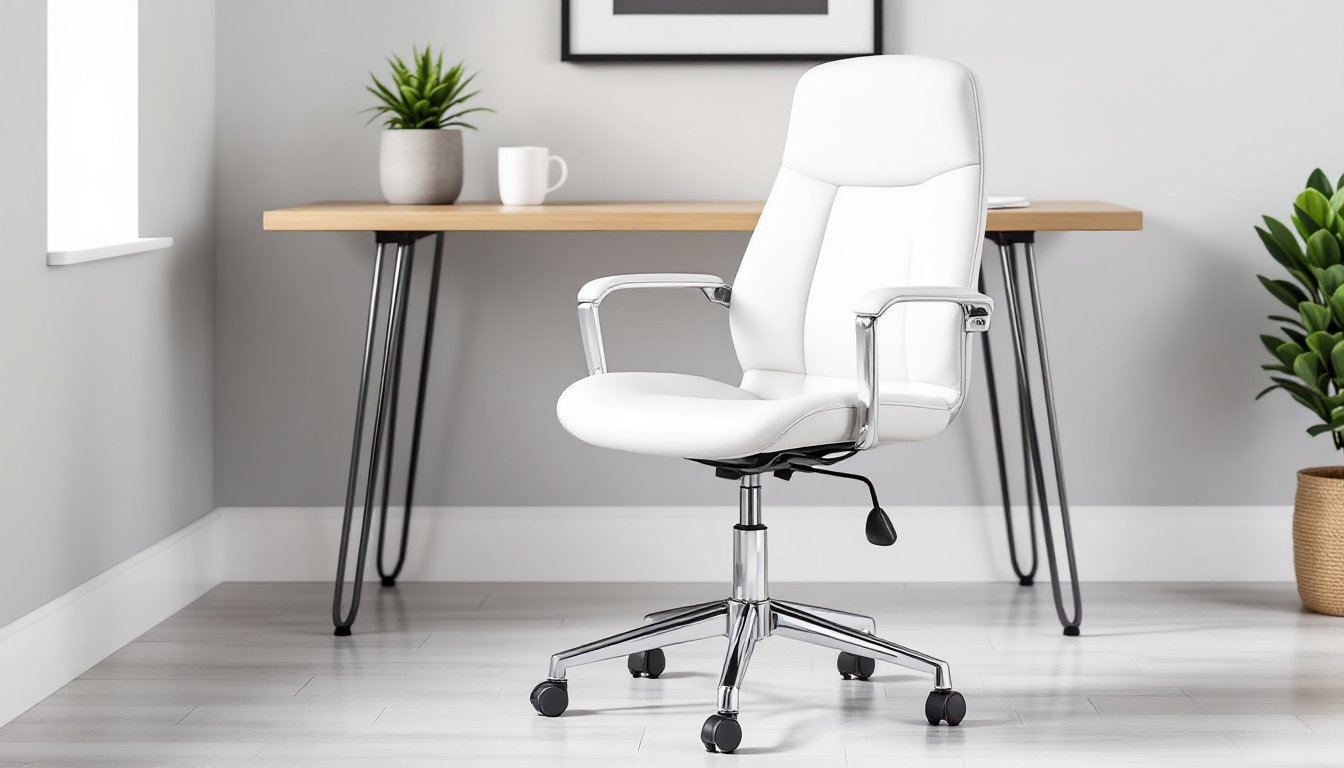
White pairs instinctively with warm wood tones, oak, walnut, maple, creating a Scandinavian or mid-century vibe. If your desk is a butcher-block top on hairpin legs, a white chair with chrome accents echoes the metal without overwhelming the wood grain. For darker woods like mahogany or cherry, white upholstery provides high contrast, drawing the eye to the chair as a focal point.
Metal desk frames in matte black, brushed nickel, or powder-coated steel harmonize with white seating. Industrial spaces, exposed brick, concrete floors, open ductwork, benefit from the softness white introduces. A white office chair with arms in tubular steel mirrors the desk’s structure while preventing the room from feeling cold or sterile.
If you’re working with bold wall colors, test paint samples beside fabric swatches. Pure white (no undertones) clashes with warm terracotta or burnt orange: opt for off-white or cream instead. Cool grays and blues allow stark white to shine. Accent pillows in geometric patterns or textured throws can bridge the gap if the combination feels flat.
Floating desks and wall-mounted shelving create visual lightness that white chairs amplify. Avoid pairing a bulky executive chair with minimalist furniture, it disrupts scale. Instead, choose a streamlined mid-back or armless task chair. Browse galleries on Houzz to see room layouts at similar square footage: filter by “home office” and “white chairs” to identify proportion pitfalls before you buy.
Lighting is non-negotiable. White chairs in poorly lit rooms read as dingy gray. Install a 5000K daylight LED bulb (at least 800 lumens) in your desk lamp or overhead fixture. Task lighting eliminates shadows that make white upholstery appear discolored, even when clean.
Maintenance and Care Tips for White Office Chairs
Weekly dusting prevents dirt from embedding into fabric or mesh. Use a microfiber cloth, terry cloth or cotton towels can scratch faux leather. For mesh backs, a handheld vacuum with a brush attachment pulls out dust trapped in the weave. Run the vacuum in horizontal passes, not circular motions, to avoid stretching the mesh.
Spot-clean spills immediately. Blot, never rub, with a damp white cloth (dyed towels can transfer color). For fabric, mix one teaspoon of dish soap with one cup of warm water: dip the cloth, wring it nearly dry, and dab the stain from the outside in. Excess water seeps into foam cushioning, causing mildew. Allow the area to air-dry completely: a fan speeds this up.
Faux leather and vinyl wipe clean with a 50/50 water-and-white-vinegar solution. Spray onto the cloth, not the chair, to avoid oversaturation. Avoid bleach or ammonia-based cleaners, they yellow or crack synthetic materials. For scuff marks from shoes or chair legs, a magic eraser sponge (melamine foam) gently lifts surface grime without harsh chemicals. Test it on an inconspicuous area first: aggressive scrubbing can remove finish.
Deep-clean every three months. Rent an upholstery steam cleaner (around $30 per day from hardware stores) or hire a professional for $75 to $150, depending on region. Steam penetrates fibers to lift oils and allergens that surface cleaning misses. Ensure the chair dries within 24 hours to prevent mold. Position a dehumidifier nearby if your workspace is humid or basement-level.
Preventative measures extend lifespan. Apply a fabric protector spray (like Scotchgard) twice yearly on non-leather upholstery. Keep the chair 3 feet from radiators or heating vents: prolonged heat dries out foam and cracks vinyl. If you eat at your desk, use a lap desk or tray to catch crumbs. Pet hair clings to white fabric, keep a lint roller in a desk drawer and use it before video calls.
Worn casters leave black streaks on floors and reduce mobility. Inspect wheels monthly: hair and thread wrap around axles, creating resistance. Pull wrapped debris off with needle-nose pliers. Replace casters ($10 to $20 for a set of five) if they crack or refuse to spin. Most snap into the base via a friction-fit grip stem, no tools required.