

Table of Contents
ToggleRunning out of clean clothes mid-trip or hunting down laundromats in unfamiliar towns is one of those minor headaches that can derail an otherwise perfect camping trip. Adding a washer and dryer to a camper or RV changes that equation entirely, offering the freedom to handle laundry on your own schedule without sacrificing precious travel time. Whether you’re full-timing in a travel trailer or taking extended road trips, having dedicated laundry equipment can make life on the road feel a lot more like home. This guide walks through the types of camper washer and dryer options available, what you’ll need for installation, and which models are worth considering in 2026.
Key Takeaways
- A camper washer and dryer saves full-time RVers significant money (typically $3–$5 per wash cycle at laundromats) while eliminating the need to plan travel stops around laundromat hours.
- Combo units offer maximum space efficiency and ventless operation, while stackable sets provide faster drying but require more vertical clearance and 240V electrical hookups.
- Portable washers deliver flexibility and affordability ($250–$350) for RVers with limited space or electrical capacity, though they require manual faucet connections and drying alternatives.
- Proper installation demands careful planning for electrical load, plumbing connections to gray water tanks, exterior vent routing, and structural floor reinforcement to handle 100–150+ pounds of equipment and water weight.
- The Splendide WD2100XC Combo and Panda Portable Washing Machine are top choices in 2026, balancing reliability, RV-specific durability, and price-to-performance value for different travel styles.
- Accurate space measurements, electrical system verification, and weight distribution checks are critical before purchasing to avoid costly installation complications and ensure safe RV handling.
Why Install a Washer and Dryer in Your Camper?
The decision to install a washer and dryer for camper life comes down to convenience, cost savings, and flexibility. For full-time RVers or anyone spending weeks on the road, laundromats add up quickly, both in dollars and time spent waiting around. A typical load at a commercial laundromat runs $3-$5 for washing and another $2-$4 for drying, which compounds over months of travel.
Beyond cost, having a washer dryer for RV use means controlling your schedule. No more planning stops around laundromat hours or dealing with out-of-service machines. It’s particularly valuable for families with kids, pet owners dealing with muddy gear, or anyone camping in remote areas where laundromats are sparse.
Space and weight are legitimate concerns, but modern compact models are designed specifically for RVs and travel trailers. Many combo units fit into closets or tight bathroom spaces, and portable models can be stowed when not in use. The trade-off is real: you’re giving up storage space and adding weight (typically 50-150 pounds), but for many travelers, the convenience outweighs those downsides.
Safety and self-sufficiency matter, too. Handling laundry in your own space reduces exposure to shared facilities, and you’re not dependent on finding a working machine in a busy campground during peak season.
Types of Camper Washer and Dryer Options
Combo Units vs. Stackable Sets
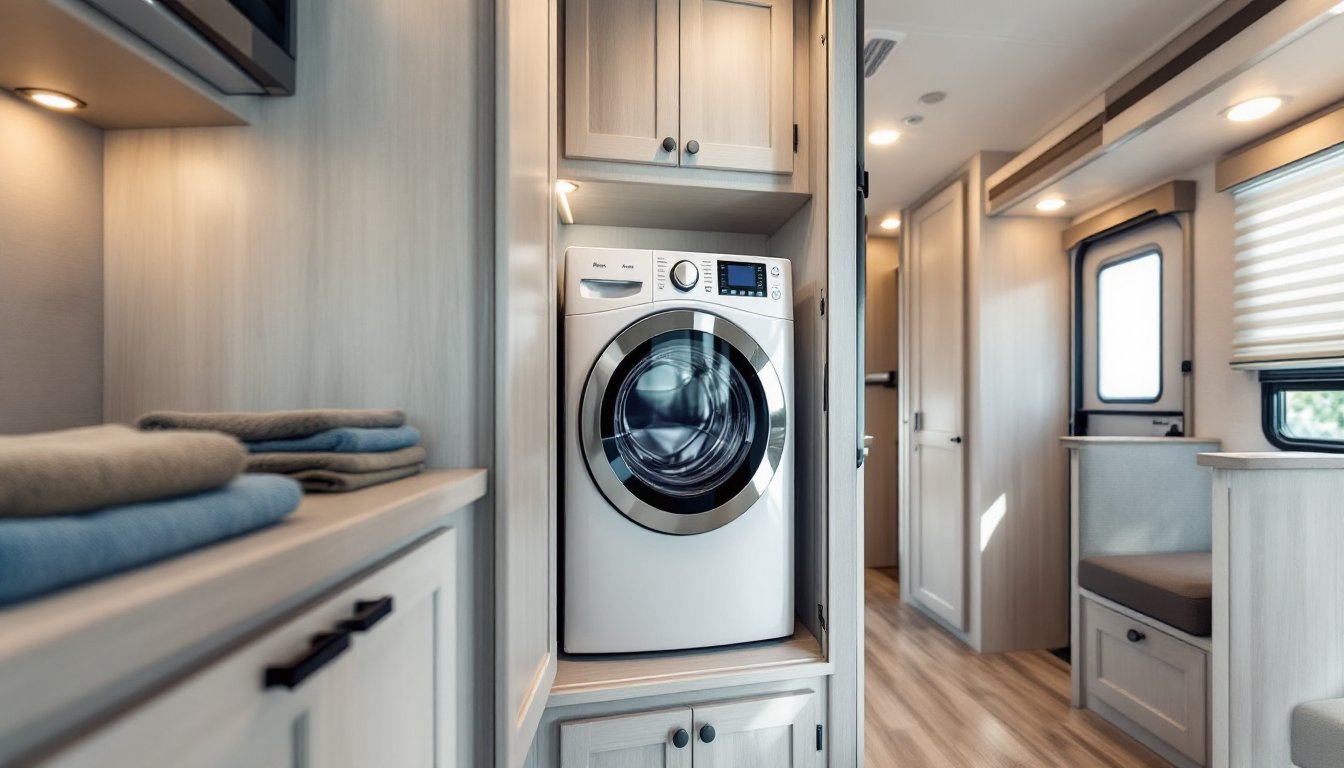
A washer dryer combo for RV installation is a single appliance that washes and dries in the same drum. These units are popular because they occupy minimal floor space, typically 24 inches wide and 33-34 inches tall. They’re ventless, using condensation drying, which eliminates the need to run exterior ductwork through your RV’s wall or roof. This makes installation simpler and preserves the camper’s envelope integrity.
The main drawback is capacity and cycle time. Most combo units handle 10-15 pounds of laundry per wash, but the drying capacity is often lower (around 8-10 pounds), meaning you may need to remove some items before switching to the dry cycle. A full wash-and-dry cycle can take 3-4 hours, which is slower than traditional machines.
Stackable sets for travel trailer washer and dryer setups offer separate washer and dryer units, typically 24 inches wide, stacked vertically to save floor space. These are true vented dryers, which dry faster and more thoroughly than ventless combos. You’ll need to install a 4-inch vent hose to the exterior, which requires cutting a hole in the RV wall and sealing it properly to prevent leaks. Stackable sets give better performance but demand more vertical clearance, usually 70-76 inches total.
Both options typically require 120V power, though some higher-capacity models need 240V, which isn’t standard in most RVs. Confirm your electrical system can handle the load: a 15-20 amp circuit is usually adequate for 120V units.
Portable and Compact Models
For RVers who don’t want permanent installations, portable washers and compact spin dryers are flexible alternatives. Portable washers are lightweight (25-40 pounds), plug into standard outlets, and connect to a kitchen or bathroom faucet via a quick-connect adapter. After the wash cycle, they drain into a sink or exterior hose connection.
These units typically handle 6-11 pounds of laundry and use a top-loading or twin-tub design. Twin-tub models have separate compartments for washing and spinning, which speeds up the process but requires manually transferring clothes between tubs. Many RVers appreciate the portable washing machines designed for small spaces, as they can be stored in a closet or under a dinette when not in use.
Compact spin dryers aren’t true dryers, they extract water through high-speed spinning (up to 3,200 RPM), leaving clothes damp but not dry. You’ll still need to air-dry or use a vented dryer afterward, but they cut drying time significantly. These are a good middle ground for campers with limited space or electrical capacity.
Ventless countertop dryers are another option, using condensation or heat pump technology to dry clothes without exterior venting. They’re slower than traditional dryers and work best for small loads, but they’re genuinely portable and require only a standard outlet.
Installation Requirements and Considerations
Installing a washer and dryer for camper use isn’t plug-and-play. You’ll need to address electrical, plumbing, ventilation, and structural support.
Electrical: Most combo units and portable washers run on 120V/15-20 amps. Check your RV’s breaker panel to confirm available capacity. If you’re running the washer while using other high-draw appliances (air conditioner, microwave), you may trip the breaker. Some RVers add a dedicated circuit or upgrade to 50-amp service if they’re full-timing. Stackable dryers that require 240V aren’t practical for most RVs unless you’re always plugged into shore power with the right hookup.
Plumbing: You’ll need a cold water supply line (hot water is optional but not required for most RV washers) and a drain connection. Many RVers tap into the bathroom or kitchen plumbing. Use a water hammer arrestor to prevent pressure spikes from damaging RV plumbing, which is typically PEX or flexible hose rather than rigid copper.
Drain options include connecting to the gray water tank (not black, laundry water contains lint and detergent residue) or using a discharge hose that empties into a utility sink or exterior drain. Some campgrounds prohibit draining gray water on the ground, so confirm local regulations.
Ventilation: Vented dryers require a 4-inch duct routed to the exterior. Drill through the sidewall (avoid structural framing), install a vent cap with a backflow damper, and seal thoroughly with butyl tape and exterior-grade sealant to prevent leaks. Ventless combo units skip this step, but you’ll want to ensure adequate interior ventilation to manage humidity during drying cycles.
Structural Support: A full washer dryer combo for camper installation can weigh 100-150 pounds empty, plus water and laundry. Ensure the floor can handle the load, especially during the spin cycle, which generates significant vibration. Reinforce the mounting area if needed, and use anti-vibration pads to reduce noise and movement.
Space Planning: Measure carefully. Standard combo units are 24″W x 24″D x 33-34″H. Stackable sets need 70-76 inches of vertical clearance. Door swing, hookup access, and maintenance clearance all matter. Some RVers install units in bathroom closets, wardrobes, or dedicated laundry cubbies.
Don’t forget weight distribution. Adding 150+ pounds to one side of the camper can affect handling and tire wear. Reweigh your RV after installation to ensure you’re within axle and GVWR (Gross Vehicle Weight Rating) limits.
Best Camper Washer and Dryer Models for 2026
Here are some of the best RV washer dryer combo and standalone options available in 2026, chosen for reliability, compact size, and RV-specific features.
Splendide WD2100XC Combo Washer-Dryer: This is the gold standard for RV combo units. It’s a ventless, 120V unit with a 15-pound wash capacity and condensation drying. The stainless steel drum resists rust, and it fits into a 24-inch closet. Cycles are long (3-4 hours for wash and dry), but it’s reliable and widely available through RV dealers. Expect to pay around $1,400-$1,600.
GE Spacemaker Stackable Washer and Dryer (GUD24GSSMWW): A 24-inch stackable set that’s popular with RVers who have the vertical clearance. The vented dryer performs better than ventless combos, and the washer handles 2.4 cubic feet (roughly 15 pounds). Requires a 240V hookup for the dryer, so it’s best for campers with 50-amp service who stay at full-hookup sites. Around $1,800-$2,000 for the set.
Panda Portable Washing Machine (PAN56MGW3): For those wanting a portable washer dryer combo for camper flexibility, this 1.6-cubic-foot top-loader is compact, affordable ($300-$350), and handles up to 11 pounds. It connects to any faucet and drains via hose. Pair it with a spin dryer or air-drying for a budget-friendly setup.
Pinnacle 18-4200 Stackable Combo: Another ventless combo popular in the RV market, the Pinnacle is similar to the Splendide but often priced slightly lower ($1,200-$1,400). It’s 120V, fits standard RV spaces, and has a reputation for durability in mobile environments.
BLACK+DECKER Portable Washer (BPWM16W): A 0.9-cubic-foot portable option for solo travelers or couples. It’s lightweight (37 pounds), runs on 120V, and costs around $250. Capacity is limited to about 6 pounds, so it’s best for quick loads or minimalist travelers.
When shopping for the best RV washer dryer combos, prioritize features like vibration control, energy efficiency (look for Energy Star ratings), and availability of replacement parts. RV-specific models are built to handle road vibration and variable power, which matters more than it does in a stationary home.
Conclusion
Adding a washer and dryer for RV life isn’t a small project, but it’s one that pays off in convenience and independence. Whether you go with a compact combo unit, a stackable set, or a portable washer, the key is matching the equipment to your electrical capacity, available space, and travel style. Measure twice, confirm your power and plumbing setup, and don’t skip the structural prep, your future self will thank you when you’re doing laundry in your pajamas instead of feeding quarters into a machine at a crowded campground.