

Table of Contents
ToggleCurtains do more than block light, they define the mood, functionality, and visual weight of a bedroom. Whether you’re tackling a quick cosmetic refresh or coordinating window treatments with a larger remodel, the right curtain bedroom ideas can shift a space from generic to intentional. This guide walks through practical approaches to fabric selection, layering techniques, color choices, and hardware installations that actually deliver results. No fluff, just workable bedroom window curtain ideas backed by dimensions, material specs, and real-world application.
Key Takeaways
- Choose bedroom curtain fabric based on function first—blackout fabrics block 95–100% of light and offer thermal insulation, while linen blends provide gentle light filtering and natural drape.
- Layering curtains with a double rod system combines blackout panels at night with decorative or sheer panels during the day, improving both energy efficiency and aesthetic flexibility.
- Bold patterns and jewel-tone colors work best as statement pieces when the rest of the bedroom remains neutral, with pattern repeats of 12–24 inches preventing a busy appearance.
- Floor-to-ceiling curtain installations create a luxurious, high-end look by mounting rods 4–6 inches below the ceiling and selecting panel lengths (96–120 inches) that just kiss the floor.
- Hardware must be mounted into wall studs or ceiling joists to safely support curtain weight; heavy fabrics like velvet require 20-pound-rated brackets and 1.5-inch rods to prevent sagging.
- Measure fabric samples in both morning and evening light before committing, as colors shift under different lighting conditions and may not appear the same as in retail showrooms.
Choosing the Right Curtain Fabric for Your Bedroom
Fabric weight and weave determine light control, thermal performance, and longevity. Start with function, then refine for aesthetics.
Blackout fabrics (typically 100% polyester or layered cotton blends) block 95–100% of light and offer measurable insulation value, helpful in climates with temperature swings or for shift workers needing daytime sleep. Standard blackout panels weigh around 200–300 GSM (grams per square meter) and often include a foam or acrylic backing. Check seam construction: cheap versions delaminate after a few washes.
Linen and linen blends breathe well, drape naturally, and soften over time. They filter light without full blackout, making them ideal for bedrooms where gentle morning light is welcome. Expect 5–10% shrinkage on the first wash, so buy panels 4–6 inches longer than your finished measurement or preshrink before hemming.
Velvet adds acoustic dampening and thermal mass. It’s heavy (300+ GSM), so mount hardware into wall studs or use toggle anchors rated for at least 20 pounds per bracket. Velvet also shows track marks and dust, so budget time for steaming and vacuuming with an upholstery attachment.
Sheer cottons and voiles offer privacy during the day while preserving natural light. They work best layered with heavier drapes or when the bedroom faces a private yard. Alone, they provide minimal insulation and virtually no sound control.
Layered Curtains for Depth and Versatility
Layering combines the light control of blackout panels with the aesthetic flexibility of sheers or decorative fabrics. It’s a classic curtain ideas for bedroom approach that also improves energy efficiency.
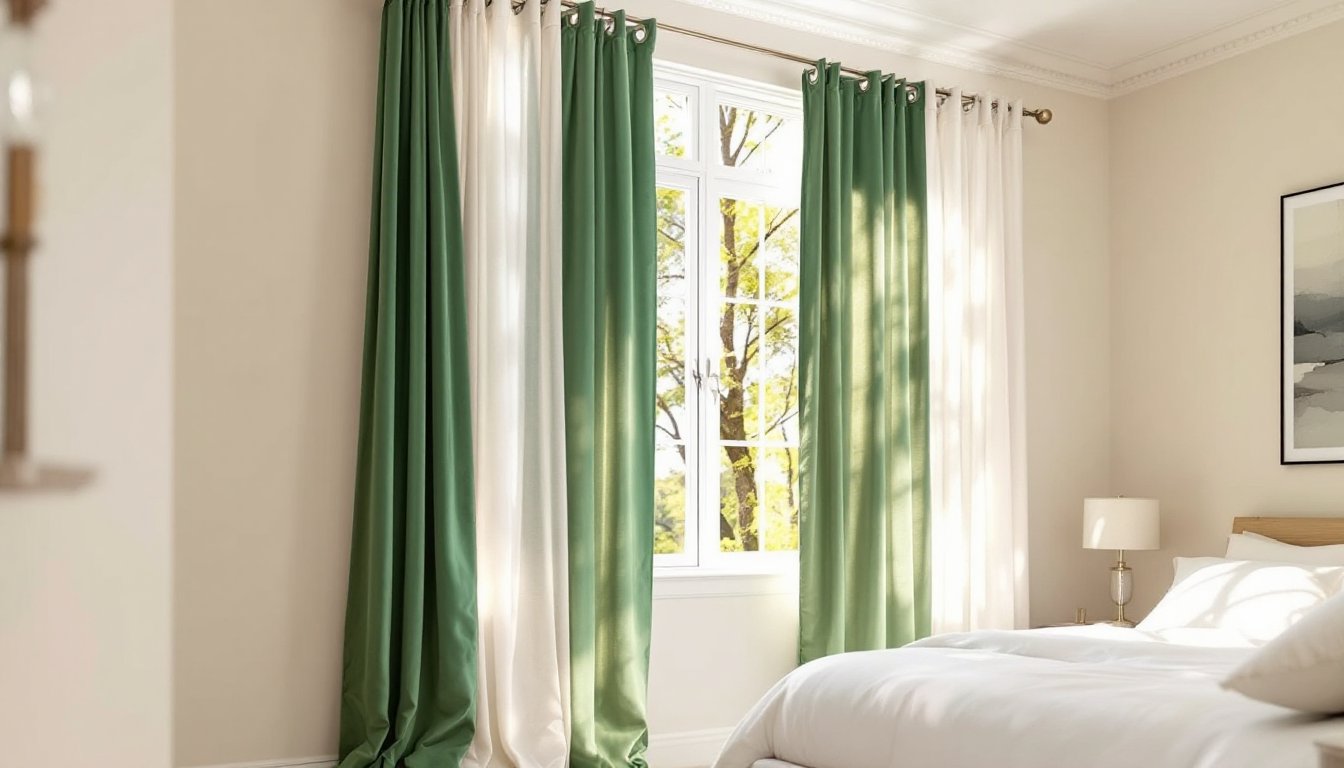
Install a double curtain rod (available in adjustable widths from 28 to 120 inches) with the sheer panel on the track closest to the window and the heavier drape on the outer rod. This setup lets occupants draw sheers during the day for diffused light and pull blackout panels at night.
For a cleaner look, mount blackout roller shades or cellular blinds inside the window frame and hang decorative curtains on a rod 4–6 inches above the frame. The blinds handle function: the curtains handle form. This method also reduces fabric bulk when drapes are open.
Track spacing matters. If using a double rod, ensure at least 2 inches of clearance between tracks so panels glide without binding. Wall-mount brackets should sit 1–1.5 inches from the wall to accommodate fabric thickness.
Layering works especially well in luxury bedroom ideas where depth and texture elevate the overall design without requiring structural changes.
Bold Patterns and Colors to Make a Statement
If the bedroom has neutral walls and minimal architectural detail, bold curtain bedroom ideas can anchor the space without painting or adding trim.
Large-scale florals, geometric prints, and abstract patterns work best when the rest of the room stays restrained. A king-size bed with solid linens and simple nightstands lets patterned drapes take center stage. Aim for patterns with a 12–24 inch repeat, smaller repeats can read as busy in larger rooms.
Jewel tones (emerald, sapphire, burgundy) add richness and pair well with warm-toned woods and brass hardware. Cooler tones (slate blue, charcoal, dove gray) complement modern or Scandinavian-leaning interiors.
Stripe orientation affects perceived ceiling height. Vertical stripes draw the eye up, useful in standard 8-foot rooms. Horizontal stripes widen narrow spaces but can shorten the visual height if the ceiling is already low.
When working with bold colors, test samples in both morning and evening light. Fabric that looks saturated under retail LEDs may shift undertones under incandescent bedside lamps or natural west-facing afternoon sun.
Designers often suggest integrating bold window treatments as a focal point, especially in rooms lacking other standout features.
Minimalist and Neutral Curtain Designs
Neutral palettes, white, cream, beige, gray, offer flexibility and won’t clash with future bedding or paint updates. Minimalist bedroom curtains ideas rely on texture and proportion rather than color contrast.
White or off-white linen provides a crisp, airy look and pairs with nearly any decor style. It’s forgiving with hem imperfections and works in both coastal and farmhouse aesthetics. For true white, choose panels labeled “optical white” or “bright white”: unbleached linen skews ivory or sand.
Grommet-top panels in solid neutrals deliver a clean, contemporary silhouette. Grommets (typically 1.5–2 inches in diameter) slide smoothly on rods and create even, vertical pleats. They’re easier to install than pinch-pleat or rod-pocket styles and don’t require rings.
Layered neutrals (cream sheers under taupe blackout drapes) add dimension without visual noise. This approach is popular in master bedroom bedroom curtain ideas where the goal is calm and cohesion.
Keep hardware minimal: matte black, brushed nickel, or natural wood rods without ornate finials. The curtain itself becomes the texture, not the hardware.
Floor-to-Ceiling Curtains for a Luxurious Look
Hanging curtains from ceiling height (rather than just above the window frame) makes ceilings feel taller and adds a custom, high-end appearance.
Measure from the ceiling (or crown molding, if present) to the floor. Standard panel lengths are 84, 96, 108, and 120 inches. For an 8-foot ceiling, 96-inch panels usually work: for 9- or 10-foot ceilings, go with 108 or 120 inches. Panels should just kiss the floor or puddle 1–2 inches for a formal look. Avoid a gap, it reads unfinished.
Mount the curtain rod 4–6 inches below the ceiling. Use a level and mark bracket locations with a pencil. Drill pilot holes and install brackets into ceiling joists or wall studs when possible. If hitting a stud isn’t feasible, use toggle anchors rated for the combined weight of rod and fabric.
Rod diameter should scale with room size and fabric weight. For standard bedrooms and medium-weight drapes, a 1-inch rod suffices. Heavier velvet or wide panels (over 100 inches per side) benefit from a 1.5-inch or thicker rod to prevent sagging.
Floor-to-ceiling treatments are especially effective in smaller bedrooms where vertical lines counterbalance limited square footage. The technique also integrates well with other interior design strategies that emphasize height and proportion.
Creative Curtain Hardware and Hanging Styles
Hardware and hanging methods influence both function and aesthetics. Standard configurations work fine, but creative approaches can solve specific layout challenges or add character.
Ceiling-mounted tracks (often used in commercial settings) offer a sleek, hardware-free look from the front. They’re ideal for modern or minimalist interiors and work well with sheer or ripplefold panels. Installation requires locating ceiling joists or using heavy-duty anchors: drywall alone won’t support the lateral forces from drawing curtains.
Swing-arm rods or hinged curtain rods let panels swing away from the window entirely, useful for doors or windows that open inward. They’re common in European tilt-and-turn windows but also solve clearance issues in tight bedroom layouts.
Rope and pulley systems aren’t common in residential bedrooms but can add industrial or nautical flair. Use marine-grade rope (at least 3/8-inch diameter) and pulleys rated for the panel weight. Anchor securely into studs.
Decorative finials (the end caps on curtain rods) come in hundreds of styles, acrylic, wood, wrought iron, glass. Choose finials that echo other metal finishes in the room (door hardware, lamps, bed frame). Oversized finials (3+ inches) require at least 6 inches of wall clearance beyond the window frame.
Clip rings offer an easy DIY alternative to sewn-in grommets or pleats. They clip onto the top edge of any fabric panel and slide on standard rods. This method works for no-sew projects or for renters who want to avoid altering store-bought panels.
Conclusion
Bedroom window curtain ideas succeed when they balance light control, thermal performance, and visual intent. Whether layering sheers over blackout panels, installing floor-to-ceiling drapes to lift a low ceiling, or using bold patterns to anchor a neutral room, the mechanics, fabric weight, rod diameter, stud placement, matter as much as the aesthetics. Measure twice, mount into solid structure, and choose fabrics that align with how the room actually gets used. The right curtains turn a functional necessity into a deliberate design decision.