

Table of Contents
ToggleChoosing the right kitchen flooring isn’t just about aesthetics, it’s about finding a material that handles spills, foot traffic, dropped utensils, and the occasional grease splatter without falling apart. The kitchen is one of the hardest-working rooms in a home, and the floor takes the brunt of it. Whether someone’s gutting a dated ’90s galley or freshening up a builder-grade layout, the flooring sets the tone for the entire space. This guide breaks down twelve solid kitchen flooring options, from waterproof luxury vinyl to classic hardwood, with honest takes on durability, installation complexity, and what actually holds up in real-world use.
Key Takeaways
- Waterproof kitchen flooring options like luxury vinyl plank and porcelain tile are essential for handling daily spills and protecting against water damage.
- Luxury vinyl plank offers the best combination of affordability ($2–$5 per square foot), easy installation, and waterproof durability for modern kitchens.
- Porcelain tile remains a timeless choice for high-traffic kitchen flooring due to its near-indestructibility and design versatility, though installation requires professional skill.
- Hardwood and natural stone add warmth and elegance but demand extra maintenance, immediate spill cleanup, and periodic refinishing or sealing.
- Consider your lifestyle and commitment level: low-maintenance options include vinyl and porcelain, while stone and hardwood reward homeowners who prioritize aesthetics over convenience.
- Alternative materials like cork, bamboo, and concrete offer eco-conscious or design-forward solutions tailored to specific kitchen styles and budgets.
What to Consider Before Choosing Kitchen Flooring
Before pulling the trigger on materials, a few practical factors narrow the field fast.
Water resistance matters more in kitchens than in any other room except bathrooms. Spills happen daily, and even minor flooding from a dishwasher leak or sink overflow can ruin certain materials. Look for flooring rated for wet environments or with waterproof cores.
Durability and hardness determine how well the floor stands up to dropped pans, chair scrapes, and pet claws. Porcelain and stone rate high on the Mohs hardness scale: softer materials like cork or certain laminates show wear faster.
Comfort underfoot affects how the kitchen feels during long cooking sessions. Hard surfaces like tile and stone are tough on joints: adding anti-fatigue mats helps, but some homeowners prioritize softer options like vinyl or cork.
Installation complexity impacts both DIY feasibility and labor costs. Floating floors (luxury vinyl, some laminates) are beginner-friendly. Tile and hardwood require more skill, and natural stone often demands professional help.
Maintenance requirements vary widely. Sealed tile grout needs periodic resealing: hardwood requires refinishing every decade or so: vinyl just needs mopping. Think about the upkeep someone’s willing to commit to.
Budget includes both material and installation. Luxury vinyl runs $2–$7 per square foot installed: porcelain tile ranges $5–$15: and natural stone can hit $10–$30 or more, depending on the type and region. Don’t forget underlayment, transitions, and removal of old flooring in the estimate.
Luxury Vinyl Plank: The Budget-Friendly Waterproof Champion
Luxury vinyl plank (LVP) has become the go-to for kitchens where water resistance and easy installation top the priority list. Modern LVP features a waterproof core, either WPC (wood-plastic composite) or SPC (stone-plastic composite), that shrugs off spills and even standing water.
The planks install as a floating floor with click-lock edges, making it a solid DIY project for someone comfortable with a utility knife and a straight edge. Most products include an attached underlayment, though adding a separate moisture barrier over concrete subfloors is smart.
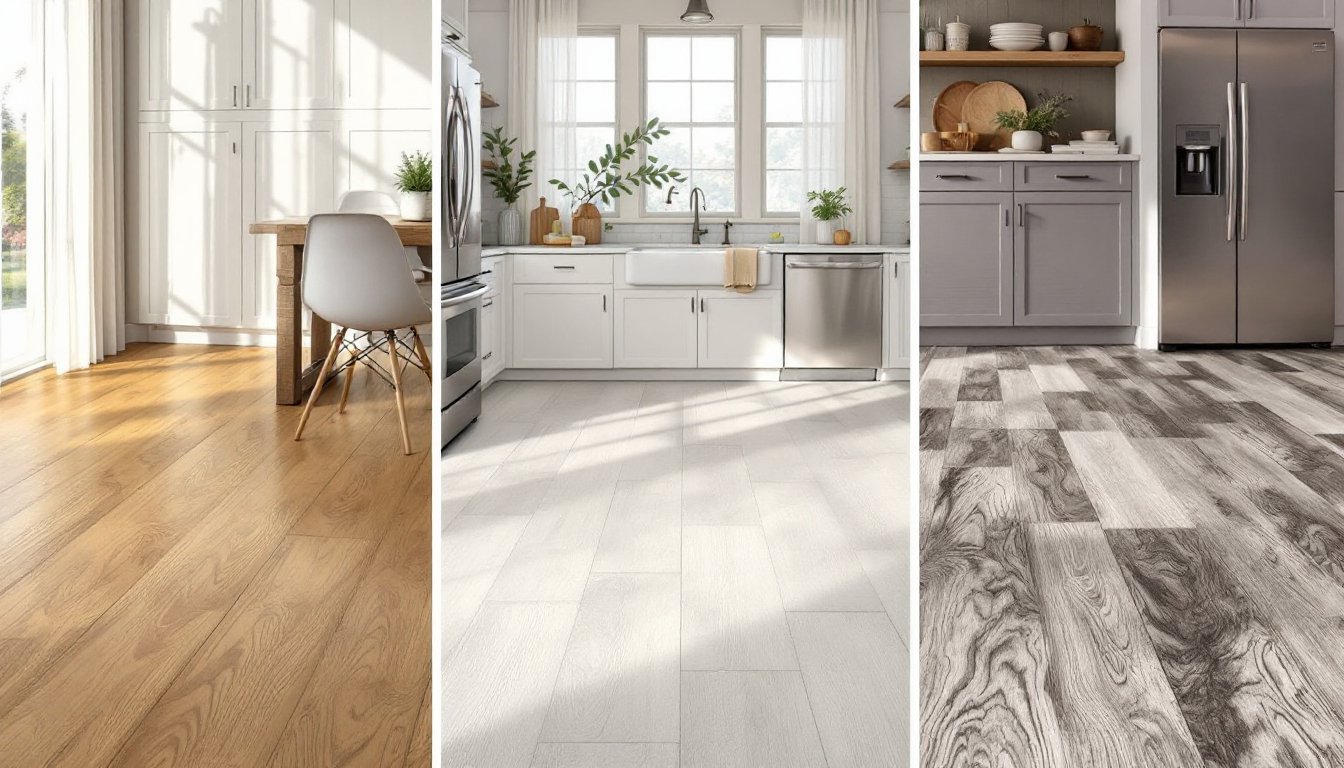
LVP mimics hardwood, stone, or tile with photographic wear layers that have improved dramatically in the last few years. High-end options include embossed textures that match the printed grain, and some are tough to distinguish from real wood at a glance.
Thickness matters: 5mm planks feel flimsy and telegraph subfloor imperfections. Go for 6–8mm with a wear layer of at least 12 mil (0.3mm) for kitchens. Commercial-grade LVP hits 20 mil and holds up in high-traffic areas.
Downsides? LVP can dent under extremely heavy appliances or furniture legs, use wide furniture pads. It also expands and contracts with temperature shifts, so leaving a ¼-inch expansion gap around the perimeter is non-negotiable. And while it’s waterproof, standing water between planks and the subfloor can still cause issues if the subfloor itself isn’t prepped correctly.
Expect to pay $2–$5 per square foot for quality LVP, plus another $1–$2 for professional installation if going that route.
Porcelain and Ceramic Tile: Timeless Durability Meets Design Versatility
Porcelain and ceramic tile remain kitchen staples for good reason: they’re nearly indestructible, fully waterproof, and available in an enormous range of colors, sizes, and finishes. Porcelain is denser and harder than ceramic, making it the better pick for high-traffic kitchens, but both perform well when installed correctly.
Tile works over concrete, plywood (minimum ¾-inch with proper deflection rating), or an uncoupling membrane like Schluter-DITRA, which prevents cracks from subfloor movement. Flooring installation demands a flat substrate, lippage (uneven tile edges) shows fast and creates trip hazards.
Large-format tiles (12×24 inches or bigger) reduce grout lines and speed up installation, but they’re harder to cut and require a wet saw. Smaller mosaics or subway tiles add visual interest but mean more grout to maintain. Speaking of grout: use epoxy grout in kitchens. It resists staining and doesn’t need sealing like traditional cement grout, which can harbor mold and grime.
Installation isn’t beginner-level. Setting tile requires mixing thinset to the right consistency, using spacers for even joints, and working in small sections before the mortar skins over. A tile cutter or wet saw is essential, and diagonal or herringbone layouts add complexity.
Porcelain and ceramic are cold and hard underfoot, an anti-fatigue mat in front of the sink and stove helps. Radiant floor heating is a popular (and pricey) upgrade that solves the cold issue, especially in northern climates.
Cost runs $3–$8 per square foot for mid-range porcelain, plus $5–$10 for professional installation. High-end designer tiles or intricate patterns push that number higher.
Hardwood Flooring: Warmth and Character for Traditional Kitchens
Solid hardwood brings warmth and timeless appeal, but it’s not the most forgiving kitchen flooring. Water is hardwood’s enemy: prolonged exposure causes cupping, warping, and finish damage. That said, many homeowners install it anyway, especially in open-plan layouts where the kitchen flows into dining or living areas.
If going with hardwood, choose a hard species: white oak, hickory, or maple all rate above 1,200 on the Janka hardness scale. Skip softer woods like pine or fir in kitchens, they dent and scratch too easily.
Engineered hardwood is the smarter play for kitchens. It has a thin veneer of real wood over a plywood core, which resists moisture movement better than solid planks. Many engineered products come prefinished with aluminum oxide or ceramic coatings that hold up to traffic and spills.
Installation methods vary: solid hardwood is face-nailed or stapled over a plywood subfloor: engineered can be nailed, glued, or floated. A floating engineered floor is the most DIY-friendly, but it can sound hollow without good underlayment.
Maintenance includes wiping up spills immediately, using rugs near the sink, and refinishing every 7–10 years (solid hardwood only, engineered veneer is too thin to sand more than once or twice). Avoid wet-mopping: use a damp microfiber mop and hardwood-specific cleaner.
Pricing spans a wide range: $3–$6 per square foot for builder-grade oak: $8–$15 for premium or exotic species: add $3–$8 for installation. Engineered hardwood can cost less upfront but limits refinishing options.
Natural Stone: Elegant Options for High-End Kitchen Designs
Natural stone, think marble, granite, slate, travertine, or limestone, delivers a high-end look that’s impossible to replicate. Each slab is unique, with natural veining, color variation, and texture that adds character. But stone demands more care and higher costs than manufactured options.
Marble is luxurious but soft and porous: it etches from acidic spills (lemon juice, vinegar, wine) and stains easily. It needs sealing every 6–12 months and careful maintenance. Some homeowners in design-forward spaces embrace the patina: others find it stressful.
Granite is much harder and more stain-resistant, though it still benefits from periodic sealing. It’s a better practical choice for busy kitchens.
Slate offers rich, earthy tones and a naturally slip-resistant surface. It’s durable and hides wear well, though the irregular surface can make it harder to clean.
Travertine and limestone are softer and more porous than granite or slate. They’re beautiful but prone to scratching and etching, so they’re best reserved for low-traffic or formal kitchens.
Stone tiles install similarly to porcelain, thinset, grout, sealer, but they’re heavier and often require professional help. Irregular thickness in natural stone means more time spent leveling during installation.
Cost varies by stone type and sourcing. Granite and slate run $8–$15 per square foot: marble and travertine can hit $15–$30 or more. Installation adds another $10–$20 per square foot for skilled labor.
Stone is cold, hard, and unforgiving on dropped dishes. It’s a commitment, gorgeous, but not low-maintenance.
Alternative Kitchen Flooring Ideas Worth Exploring
Beyond the heavy hitters, a few alternative materials deserve consideration depending on style, budget, and priorities.
Cork flooring is warm, cushioned, and naturally antimicrobial. It’s quiet underfoot and comfortable for long stretches of standing. Cork is water-resistant but not waterproof, spills need prompt cleanup. It installs as floating planks or glue-down tiles, and it can be refinished with polyurethane if the finish wears. Expect $3–$8 per square foot.
Bamboo looks similar to hardwood but grows faster, making it a more sustainable pick. Strand-woven bamboo is harder than oak and handles kitchen traffic well. Like hardwood, it’s vulnerable to water damage, so engineered bamboo is the safer bet. Pricing sits around $3–$7 per square foot.
Concrete flooring works in industrial or modern kitchens. Polished concrete is durable, low-maintenance, and can be stained or scored for custom designs. It’s cold and extremely hard, though radiant heating helps. Professional installation runs $5–$15 per square foot depending on finish level.
Laminate flooring mimics wood or stone at a fraction of the cost ($1–$5 per square foot). Modern water-resistant laminates handle light spills, but they’re not fully waterproof. Laminate can’t be refinished, once the wear layer is gone, it’s replacement time. It’s a decent budget option for rentals or temporary updates.
Linoleum (not vinyl, real linoleum is made from linseed oil, wood flour, and cork dust) is biodegradable, durable, and available in bold colors and patterns. Installers at design-conscious firms often use it in retro or eclectic kitchens. It requires professional installation and periodic waxing. Cost is $4–$8 per square foot.
Rubber flooring is commercial-grade tough, slip-resistant, and comfortable. It’s not common in residential kitchens but works in households prioritizing accessibility or safety. Installation is straightforward, and pricing runs $3–$10 per square foot depending on thickness and finish.
Each of these materials has a niche. Cork and bamboo suit eco-conscious homeowners: concrete fits minimalist or loft-style spaces: laminate works for tight budgets. Match the material to the kitchen’s use case and design vision.
Conclusion
Kitchen flooring is a balance of function, durability, and style. Waterproof options like luxury vinyl and porcelain tile handle daily wear without fuss. Hardwood and stone bring character but demand more maintenance and careful spill management. Alternative materials like cork, bamboo, or concrete carve out their own advantages depending on priorities. Whatever the choice, proper installation and realistic expectations about upkeep will determine how well the floor holds up over the next decade.