
Table of Contents
ToggleBringing a commercial air purifier into a home sounds like overkill, until you realize residential models can’t keep up with wildfire smoke, pet dander from three dogs, or a woodshop in the garage. Commercial-grade units aren’t just for office buildings and hospitals. They’re built to move serious air volume, filter it aggressively, and run continuously without burnout. For homeowners dealing with allergies, renovations, or simply wanting cleaner air faster, a commercial unit can outperform consumer models by a wide margin. This guide breaks down what sets commercial air purifiers apart, when they make sense, and how to choose the right one without overspending.
Key Takeaways
- Commercial air purifiers deliver 400–1,200+ CFM with industrial-grade motors built for 24/7 continuous operation, outperforming residential models in handling wildfire smoke, pet dander, and renovation dust.
- For effective allergen and pathogen reduction, target 4–6 air changes per hour (ACH) in your space—higher than manufacturer coverage claims—to ensure consistent air quality improvement.
- A commercial air purifier should feature true HEPA (H13 or H14) filtration with multi-stage systems including pre-filters, activated carbon, and optional UV-C to address particles, VOCs, odors, and chemical off-gassing.
- Position the unit centrally with 18–24 inches of clearance on all sides, avoid corners and blocked spaces, and consider bedroom placement with quiet modes under 50 dB for overnight allergen reduction.
- Budget $150–$400 annually for filter replacements and expect continuous high-speed operation to cost $11–$23 per month, with energy savings of 40–60% by using medium or low speeds during normal conditions.
- Verify UL or ETL residential certification and confirm replacement filter availability through direct consumer sales or HVAC supply channels before purchase, as some commercial brands serve institutional markets only.
What Makes Commercial Air Purifiers Different from Residential Models?
Commercial air purifiers are engineered for continuous, high-demand use in environments where air quality can’t wait. The core differences come down to airflow capacity, motor durability, and filtration scale.
Residential units typically move 100–300 cubic feet per minute (CFM) and cover 300–800 square feet. Commercial models push 400–1,200+ CFM and handle spaces from 1,000 to over 5,000 square feet. That means faster air turnover, critical when dealing with smoke, VOCs from fresh paint, or airborne dust from drywall work.
Motor and fan construction is another divide. Consumer models use smaller, lighter-duty motors designed for 8–12 hours of daily operation. Commercial units feature industrial-grade motors rated for 24/7 runtime, often with metal housings instead of plastic, and reinforced fan blades to handle higher static pressure from dense filter stacks.
Filter size and media volume also differ. An industrial HEPA air purifier may use filters with 50–100+ square feet of media surface area, compared to 15–30 square feet in home units. More media means longer filter life, better particle capture, and sustained airflow even as the filter loads with contaminants.
Finally, control systems on commercial models often include programmable timers, remote monitoring, and filter-change alerts, features borrowed from HVAC systems rather than consumer electronics. This makes them easier to integrate into larger home automation setups or whole-home ventilation plans.
Why Homeowners Are Choosing Commercial-Grade Air Purifiers
Homes aren’t sterile boxes, they’re workshops, pet habitats, kitchens generating grease aerosols, and spaces where pollen, mold spores, and construction dust accumulate faster than a single residential purifier can manage.
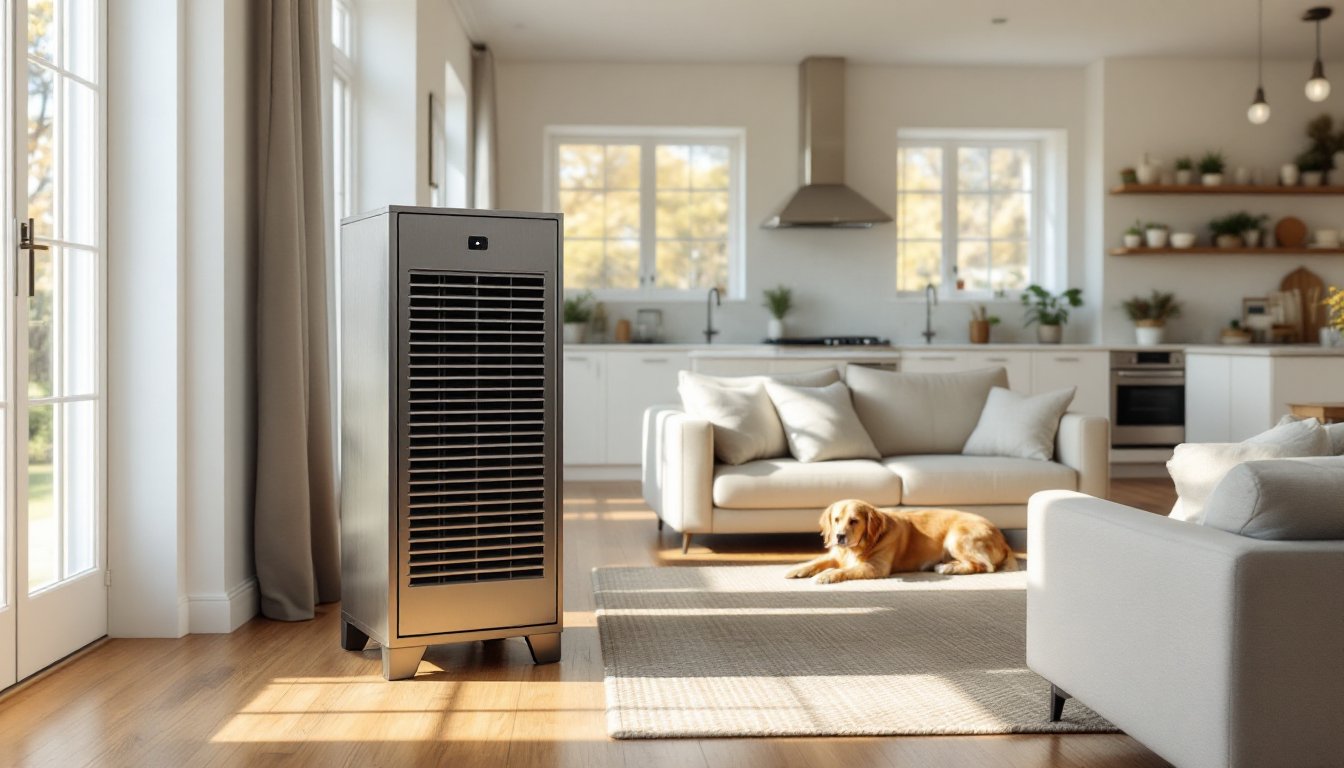
Homeowners with open floor plans (great rooms combining kitchen, dining, and living areas) often find that multiple consumer units can’t deliver consistent air quality. A single commercial air purifier positioned centrally can cover 1,500–2,500 square feet and achieve 4–6 air changes per hour (ACH), the rate recommended by the EPA for effective allergen and pathogen reduction.
Renovation and remodeling projects generate particulate loads that overwhelm residential filters in days. Drywall dust, saw fines, paint fumes, and adhesive VOCs need aggressive filtration. High-capacity air purifiers designed for commercial use handle these conditions without constant filter replacement or motor strain.
Pet owners with multiple animals face a similar challenge. Dander, fur, and litter dust accumulate faster than basic HEPA units can cycle. A commercial model with pre-filters and activated carbon stages keeps up with the load and reduces odor more effectively.
Finally, wildfire smoke and seasonal air quality events have pushed many homeowners toward commercial-grade solutions. When outdoor PM2.5 levels spike, the ability to scrub indoor air rapidly, and keep doing it for days, becomes a health necessity, not a luxury.
Key Features to Look for in a Commercial Air Purifier
Choosing the right unit means matching features to your space and air quality challenges. Here’s what matters most.
HEPA Filtration and Multi-Stage Systems
True HEPA filters (meeting the H13 or H14 standard per EN 1822) capture 99.97% of particles down to 0.3 microns. This includes pollen, mold spores, dust mite waste, and most bacteria. HEPA is non-negotiable for allergy sufferers or anyone dealing with fine particulate from sanding, cutting, or grinding.
Commercial units often use multi-stage filtration:
- Pre-filter: Traps large particles (hair, lint, sawdust) to extend HEPA life.
- Activated carbon or potassium permanganate layer: Adsorbs VOCs, formaldehyde, smoke odors, and chemical off-gassing from new flooring or cabinetry.
- HEPA stage: Captures fine particulate.
- Optional UV-C or ionization: Deactivates airborne pathogens. UV-C is effective but requires proper lamp replacement schedules: ionizers produce trace ozone and aren’t recommended in occupied spaces without verified low-emission ratings.
Look for units with easy filter access, commercial models should allow tool-free filter changes and clearly labeled replacement intervals. Expect HEPA filters to last 12–24 months under typical home use, longer than consumer models because of larger media volume.
Coverage Area and Air Changes Per Hour (ACH)
Coverage area ratings are often inflated. Manufacturers calculate them at 2 ACH, which is too low for effective allergen control. For serious air quality improvement, aim for 4–6 ACH. Divide the unit’s rated CFM by your room’s cubic footage, then multiply by 60 to get ACH.
Example: A room that’s 20×25 feet with 10-foot ceilings = 5,000 cubic feet. A purifier rated at 500 CFM delivers (500 ÷ 5,000) × 60 = 6 ACH, ideal for allergy or smoke control.
Testing by independent reviewers shows that units with higher CADR (Clean Air Delivery Rate) scores perform better in real-world conditions, especially when doors are open or HVAC systems create air mixing between rooms.
Variable speed controls matter. Running at lower speeds reduces noise and energy use during overnight operation, while high speeds handle acute events (cooking smoke, pet accidents, post-sanding cleanup). Look for models with at least three fan speeds and a quiet mode under 50 dB.
Best Rooms and Spaces for Commercial Air Purifier Installation
Placement drives performance. A powerful unit in the wrong spot won’t deliver the air quality improvement you’re paying for.
Great rooms and open-concept spaces are prime candidates. Position the purifier centrally, away from walls and furniture that block airflow. Maintain at least 18–24 inches of clearance on all intake and exhaust sides. If the unit has top exhaust, don’t place it under a low shelf or cabinet.
Home workshops and garages benefit enormously from commercial air purifier use. Sawdust, metal grindings, and chemical vapors from finishes require robust filtration. Mount the unit at workbench height or use a wheeled model that can relocate near active work zones. Ensure the pre-filter is washable or inexpensive, it’ll need frequent cleaning.
Basements with moisture, musty odors, or finished living areas gain from commercial units with carbon stages. These spaces often have poor natural ventilation, making high ACH critical. If you’re finishing a basement or dealing with post-flood remediation, an industrial HEPA air purifier running 24/7 accelerates drying and removes mold spores before they colonize.
Bedrooms can accommodate smaller commercial models (400–600 CFM range) if noise is a concern. Top-rated purifiers for 2026 include units with sleep modes and variable-speed DC motors that run quietly while still delivering 3–4 ACH overnight, enough to reduce allergen exposure during sleep.
Avoid placing purifiers:
- Behind doors or in corners where air circulation is blocked
- Near humidifiers or air conditioners (conflicting airflows reduce efficiency)
- In direct sunlight or near heat sources (UV degrades plastic housings and internal components)
Whole-home integration: Some homeowners install a commercial unit in a central hallway or utility room and use box fans or HVAC ductwork to distribute filtered air. This isn’t a code-approved HVAC modification, consult an HVAC professional if you want to tie a purifier into return ducts. DIY fan placement can work but won’t achieve the same precision.
Maintenance and Operating Costs: What to Expect
Filter replacement is the largest recurring cost. HEPA filters for commercial units range from $80–$250 depending on size and brand. Pre-filters run $15–$40 and should be checked monthly, vacuuming or washing extends their life. Carbon filters last 6–12 months and cost $30–$100.
Budget $150–$400 annually for filters if running a commercial air purifier in a typical home environment. Dustier conditions (renovations, unpaved driveways, multiple pets) push costs toward the high end.
Energy consumption varies. A 500-CFM unit running on high draws 150–300 watts: at $0.13/kWh, that’s roughly $11–$23 per month for continuous operation. Most homeowners run units on medium or low speeds except during acute events, cutting costs by 40–60%. Look for models with Energy Star certification or DC motor designs, they’re 20–30% more efficient than older AC motor units.
Maintenance tasks include:
- Monthly: Vacuum or rinse pre-filters. Check for visible dust buildup on intake grilles.
- Quarterly: Inspect HEPA filter housing seals for gaps or damage. Verify fan blades are clean (dust accumulation reduces CFM).
- Annually: Replace HEPA and carbon filters per manufacturer schedule, even if they look clean. Filter media saturates internally before visible clogging occurs.
- As needed: Clean exterior housing with a damp cloth. Avoid solvents that can off-gas into the air stream.
Noise and durability: Commercial units are louder than whisper-quiet consumer models, expect 55–70 dB on high speed, similar to a household vacuum. Metal construction means they’ll outlast plastic residential units, often running 10+ years with proper maintenance. Motors are typically user-replaceable or repairable, unlike sealed consumer electronics.
Safety notes: Ensure the unit is UL or ETL listed for residential use. Commercial models sometimes carry industrial certifications that don’t cover home electrical standards. If using the purifier in a workshop, wear appropriate PPE (dust mask, safety glasses) during filter changes, HEPA filters trap hazardous particles that shouldn’t be inhaled.
Before buying, verify replacement filter availability. Some commercial brands serve institutional markets and don’t stock parts for individual buyers. Stick with manufacturers offering direct consumer sales or widely distributed filters through HVAC supply channels.