

Table of Contents
ToggleSmart doorbells have evolved from simple buzzers to full-blown security hubs. The Vivint doorbell camera sits at the premium end of that evolution, offering crystal-clear video, AI-driven alerts, and seamless integration with a professionally monitored security ecosystem. But unlike standalone options you can grab off Amazon, Vivint’s doorbell camera is part of a larger home security package, which changes the installation, pricing, and ownership experience entirely. For homeowners serious about security who want everything working together without piecemeal apps and batteries dying at the worst moment, it’s worth understanding what Vivint brings to the table, and what trade-offs come with it.
Key Takeaways
- The Vivint doorbell camera is a hardwired, professionally installed device that integrates seamlessly with Vivint’s full security ecosystem, requiring no DIY installation and eliminating battery concerns.
- AI-powered person and package detection reduces false alerts while supporting customizable motion zones, paired with 24/7 professional monitoring for real-time threat response and emergency dispatch.
- Vivint doorbell camera pricing is bundled into monthly service contracts (typically $30–$60/month) with 42–60 month commitments, so upfront hardware costs and long-term flexibility differ significantly from standalone competitors.
- The system provides three-layer security through deterrence (visible design and Smart Deter ring light), detection (AI alerts), and response (professional monitoring and remote smart lock integration), which standalone doorbells rarely match.
- This solution is best suited for homeowners committed to a fully integrated smart home security system who prioritize professional support over DIY flexibility and are willing to accept long-term contracts and monthly monitoring fees.
What Is the Vivint Doorbell Camera?
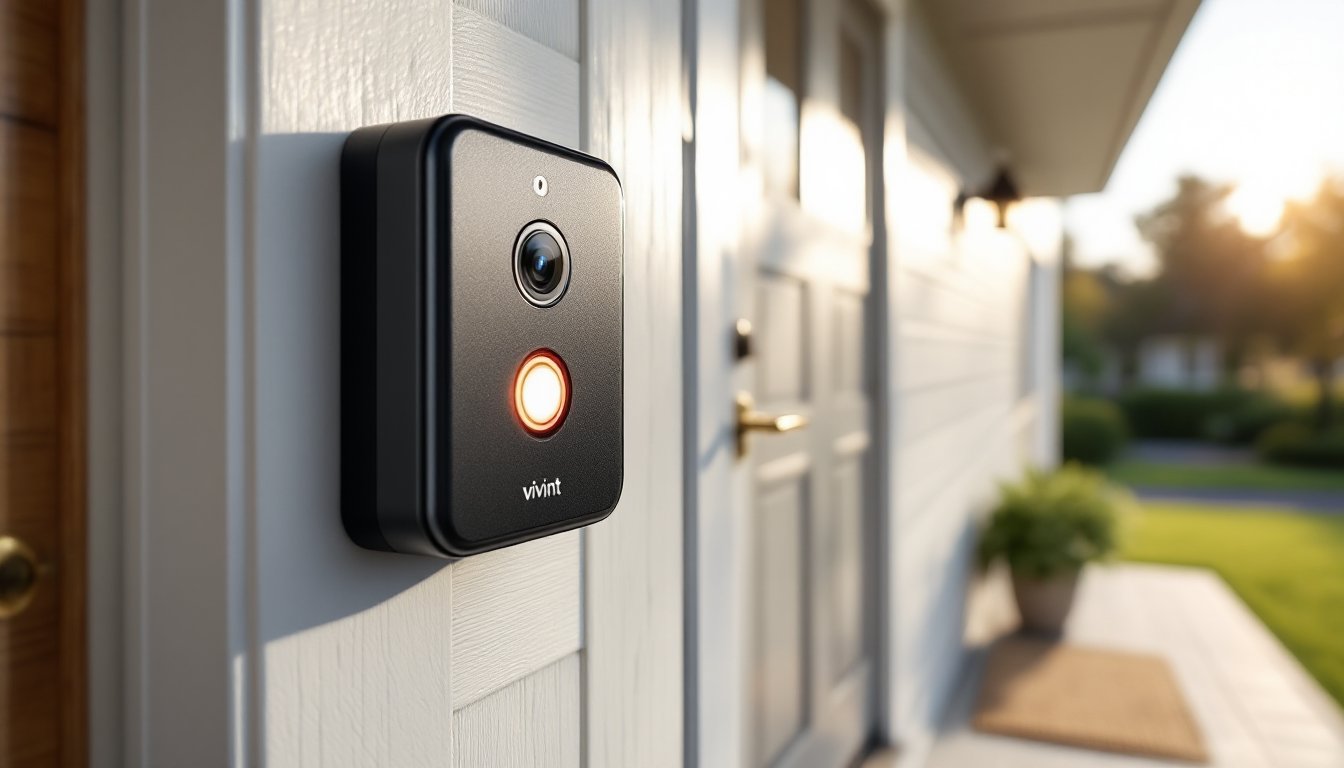
The Vivint doorbell camera is a hardwired, professionally installed video doorbell that integrates directly with Vivint’s home security and smart home platform. It replaces your existing doorbell and connects to your home’s low-voltage wiring (typically 16–24V AC from a doorbell transformer). Unlike battery-powered competitors, it draws continuous power, which supports higher-resolution streaming and faster response times.
Vivint offers two models as of 2026: the Vivint Doorbell Camera Pro and the newer Vivint Doorbell Camera Pro (Gen 2). The Gen 2 version brings upgraded image processing, improved HDR for high-contrast scenes (like bright porches with shadowed faces), and a wider field of view. Both models feature two-way audio, motion detection, and integration with Vivint’s broader security panel, smart locks, and cameras.
What sets the Vivint camera doorbell apart is its tight integration. Alerts flow through Vivint’s app and can trigger automations, lock the door, turn on lights, or send footage to Vivint’s 24/7 monitoring station if paired with a professional monitoring plan. It’s not a standalone device: it’s a node in a managed security system.
Key Features and Specifications
The Vivint Doorbell Camera Pro (Gen 2) includes the following core features:
- 1080p HD video with HDR imaging for balanced exposure in mixed lighting
- 180-degree field of view (diagonal), capturing head-to-toe footage and package drop-offs
- Night vision using infrared LEDs, effective to about 15 feet
- Two-way audio with noise cancellation to reduce wind and background sounds
- Smart Deter technology: a red ring light that activates when motion is detected, signaling the camera is recording
- Person detection powered by AI to reduce false alerts from cars, animals, or blowing debris
- Package detection that sends alerts when a delivery is spotted
- Weatherproof housing rated to IP65, suitable for most climates (though direct rain exposure on the lens can blur footage temporarily)
Both the Pro and Gen 2 models work with Vivint’s SkyControl panel and integrate with Amazon Alexa and Google Assistant for voice commands. Video is stored in the cloud: there’s no local SD card option. Storage duration depends on your monitoring plan, typically 30 days for standard plans, up to 60 days for premium tiers.
One note: the doorbell requires a compatible transformer. Vivint’s installer will check voltage during setup, and if your existing transformer is underpowered (common in older homes), they’ll upgrade it as part of installation.
Installation Options for Homeowners
Vivint does not sell equipment directly to consumers for DIY installation. All hardware, including the doorbell camera Vivint offers, comes with professional installation as part of the service contract. This is a key differentiator, and a sticking point for some DIYers.
Professional Installation vs. DIY Setup
Vivint’s model is turnkey. A licensed technician schedules an on-site visit, assesses your existing doorbell wiring, installs the camera, mounts it level (critical for accurate motion zones), connects it to your home’s Wi-Fi and security panel, and walks you through the app. Installation typically takes 1–2 hours depending on whether additional components (cameras, sensors, locks) are part of the package.
Pros of professional installation:
- No guesswork on transformer compatibility or wiring polarity
- Proper weatherproofing and mounting on varied siding (vinyl, brick, stucco, or wood)
- Immediate troubleshooting if Wi-Fi signal is weak at the front door
- Integration testing with the full security system
Cons:
- Less control over scheduling and timing
- No option to purchase equipment outright and install yourself
- Can feel over-engineered for homeowners comfortable with basic electrical work
For comparison, many video doorbells on the best video doorbells in 2026 roundups are designed for DIY install with included step-by-step guides. Vivint’s approach trades flexibility for reliability, ideal for homeowners who want a functioning system from day one without troubleshooting app permissions or weak chime signals.
Safety note: Even though doorbell voltage is low (16–24V AC), always turn off the breaker feeding your doorbell transformer before any wiring work. Use a non-contact voltage tester to confirm power is off.
How the Vivint Doorbell Camera Enhances Home Security
The Vivint doorbell camera delivers security value through three layers: deterrence, detection, and response.
Deterrence starts with visibility. The camera’s distinct design and glowing Smart Deter ring signal that the property is monitored. For package thieves and porch pirates, that’s often enough to move on. Combined with Vivint yard signs and window decals, it creates a clear security perimeter.
Detection leans on AI-powered alerts. Person detection filters out false positives, no alerts for passing cars or neighborhood cats. Package detection sends a push notification within seconds of a delivery, so homeowners can verify the drop or alert a neighbor if they’re away. Motion zones can be customized in the app to ignore sidewalk traffic and focus on the porch and steps.
Response is where professional monitoring makes a difference. If Vivint’s monitoring plan is active and a suspicious event is flagged (repeated doorbell rings at 2 a.m., someone lingering after a motion alert), the monitoring center can review live footage and dispatch authorities if needed. Integration with smart locks means a homeowner can unlock the door remotely for a trusted delivery person or let in a contractor, all logged with timestamped video.
Vivint’s ecosystem also supports automations. For example, when the doorbell detects a person at night, it can trigger outdoor floodlights and an indoor chime on the security panel. These integrations, common in professional systems but rare in DIY setups, add layers of contextual security that standalone devices can’t match.
Pricing, Monitoring Plans, and What to Expect
The Vivint doorbell camera price isn’t a simple retail number. Vivint bundles equipment costs into service contracts, so pricing depends on the package, financing terms, and monitoring plan.
As of early 2026, expect the following structure:
- Equipment cost: The doorbell camera itself typically ranges from $200–$300 when financed over 42–60 months as part of a Vivint system. Upfront purchase options exist but are less common.
- Professional installation: Usually included in the contract, though some promotions waive it entirely.
- Monthly monitoring: Vivint requires a monitoring plan. Basic plans start around $30–$40/month for essential monitoring and mobile app access. Premium plans with extended cloud storage, smart home control, and advanced AI features run $45–$60/month.
Vivint frequently runs promotions, free installation, discounted equipment, or first-month-free offers, especially for bundled packages (doorbell + indoor camera + door lock + panel). Pricing varies by region, existing promotions, and negotiation during the sales call.
Contracts: Most Vivint agreements are 42–60 months. Early termination fees apply, typically the remaining balance on financed equipment. This is a major consideration for renters or homeowners planning to move within a few years.
No standalone purchase: Unlike devices sold by CNET-reviewed brands that you can buy outright and use with or without a subscription, Vivint ties the hardware to the service. You can’t buy a Vivint doorbell camera on Amazon and use it independently.
For cost-conscious DIYers, this model feels restrictive. For homeowners who value integrated security and don’t want to manage multiple apps and warranties, it simplifies budgeting into a single monthly bill.
Pros and Cons: Is the Vivint Doorbell Camera Right for You?
Pros:
- Seamless integration with Vivint’s security panel, locks, cameras, and smart home devices
- Professional installation eliminates wiring mistakes and ensures proper setup from day one
- Hardwired power means no battery swaps or dead cameras during critical moments
- AI-powered detection reduces false alerts and surfaces meaningful events quickly
- 24/7 professional monitoring option for real-time response and emergency dispatch
- High build quality and reliable performance in varied weather conditions
Cons:
- No DIY installation or standalone purchase option, locked into Vivint’s ecosystem
- Monthly monitoring fees are mandatory and add up over time
- Long-term contracts with early termination penalties limit flexibility
- Higher upfront and ongoing cost compared to battery-powered competitors or DIY systems
- Cloud-only storage, no local backup if internet goes down
- Limited customization for advanced users who want granular control over firmware or integrations
Is it right for you?
The Vivint doorbell camera makes the most sense for homeowners committed to a full smart home security system who value professional support and seamless device integration. It’s ideal if you’re building out a multi-camera, monitored setup and want everything managed through one app and one support line.
It’s less appealing if you’re a hands-on DIYer who prefers to buy hardware outright, avoid monthly fees, or integrate devices across multiple platforms. In those cases, exploring options covered by Digital Trends in their smart home roundups may offer better flexibility and control.
Eventually, it’s about aligning the product’s strengths, reliability, integration, professional oversight, with your home security priorities and budget. For the right household, the Vivint doorbell camera is a cornerstone of serious home protection. For others, it’s overkill with strings attached.