
Table of Contents
ToggleBathroom wallpaper has come a long way from the peeling vinyl disasters of decades past. Today’s moisture-resistant options give homeowners the freedom to bring bold color, intricate patterns, and serious personality into one of the smallest rooms in the house. Whether working with a powder room that needs drama or a primary bath that could use softening, wallpaper offers a faster, often more affordable route to transformation than tile. This guide breaks down pattern choices, material specs, and installation considerations to help DIYers and decorators make smart decisions that’ll last.
Key Takeaways
- Modern moisture-resistant bathroom wallpaper offers a faster, more affordable alternative to tile, with vinyl and non-woven options that resist mold and humidity without requiring grout maintenance.
- Bathroom wallpaper ideas range from bold tropical and geometric patterns for statement walls to subtle textures and watercolor designs for serene, relaxing spaces.
- Solid vinyl wallpaper (Type II) is the gold standard for moisture-prone areas, while non-woven and quality peel-and-stick options work well in powder rooms and well-ventilated bathrooms.
- Proper ventilation—running exhaust fans during and 20 minutes after showers—extends wallpaper longevity as significantly as material choice.
- In small bathrooms, light colors, vertical patterns, and single accent walls maximize space visually, while large-scale prints and ceiling treatments create unexpected design interest.
- DIYers can install bathroom wallpaper in an afternoon with basic tools; precision placement and accurate pattern matching prevent visible seams and ensure professional results.
Why Wallpaper Is Making a Comeback in Modern Bathrooms
The resurgence of bathroom wallpaper isn’t just about aesthetics, it’s driven by material innovation. Vinyl-coated wallpapers, solid vinyl, and non-woven substrates now offer moisture resistance that rivals traditional tile in low-splash zones. These materials resist mold, won’t bubble when humidity spikes, and clean up with a damp cloth.
Manufacturers have also improved adhesive chemistry. Peel-and-stick options use repositionable adhesive that doesn’t rely on wheat paste, which historically failed in damp conditions. Traditional paste-the-wall vinyl products now include mildew inhibitors and stronger bonding agents rated for high-humidity environments.
From a practical standpoint, wallpaper installation takes less time than tiling and doesn’t require grout maintenance. A competent DIYer can paper a powder room in an afternoon with basic tools: a smoothing tool, utility knife, level, and seam roller. Compare that to the tile-setting learning curve, mortar mixing, spacer placement, grouting, sealing, and the appeal becomes clear.
Cost is another factor. Mid-range wallpaper runs $30–$80 per roll (covering roughly 28–30 square feet after pattern matching), while ceramic tile averages $5–$15 per square foot installed. For accent walls or small baths, wallpaper often delivers high visual impact at a fraction of the cost.
Bold Pattern Ideas That Make a Statement
High-contrast patterns work especially well in small bathrooms where a single accent wall can define the entire space. The key is balancing scale with room size, oversized prints can overwhelm a 5×8 powder room, while tiny motifs might read as visual noise.
Tropical and Botanical Prints
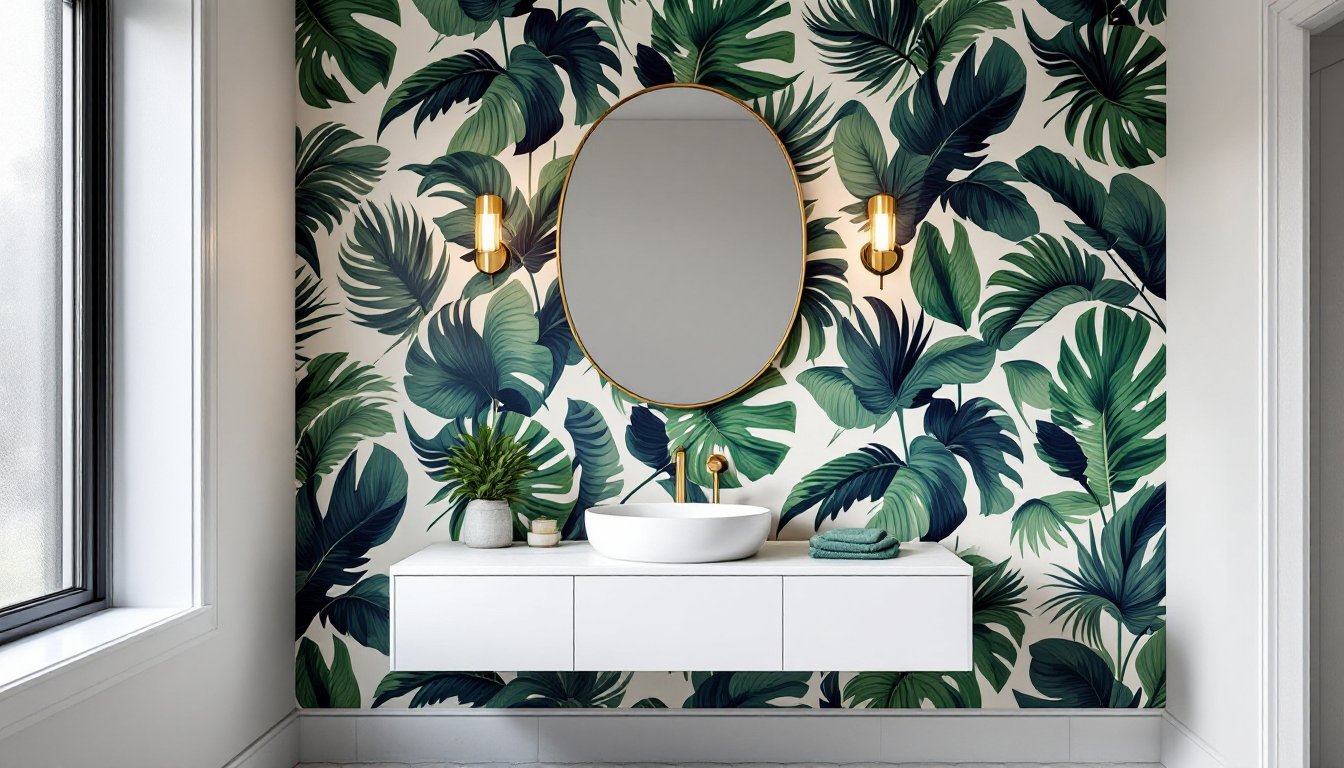
Palm fronds, monstera leaves, and banana leaf patterns bring an organic, spa-like energy without requiring actual plants (which struggle in windowless baths). These prints work best on a single feature wall, typically behind the vanity or opposite the entry, to avoid a jungle-overload effect.
When selecting tropical wallpaper for bathrooms, look for vinyl or vinyl-coated options rather than paper-backed grasscloth, which won’t hold up to steam. Dark green or navy backgrounds tend to hide water spots better than white or cream.
For installation, many curated home design galleries showcase how pros handle pattern matching at corners. Botanical prints with large repeats (24 inches or more) require careful planning, measure your wall height and calculate how many full pattern repeats fit vertically before purchasing. Ordering an extra roll prevents mid-project shortages when seams don’t align as planned.
Geometric and Art Deco Designs
Hexagons, chevrons, scallops, and stepped Art Deco motifs bring structure and movement. These wallpaper ideas for bathroom spaces work particularly well in modern or transitional interiors where clean lines dominate.
Geometric patterns require precision during installation. Misaligned seams are immediately visible, especially with high-contrast colorways. Use a 4-foot level and snap a plumb line before hanging the first strip. For peel-and-stick geometrics, the repositionable adhesive gives you a few chances to correct alignment, traditional paste doesn’t.
Metallic accents in Art Deco patterns (gold foil, silver leaf effects) add depth but show imperfections in wall prep. Fill nail holes, sand rough patches, and prime with a PVA primer if working over fresh drywall. Metallic finishes amplify texture, so skip them if your walls have orange-peel texture or previous repair patches.
Subtle and Calming Wallpaper Options
Not every bathroom needs to shout. Grasscloth textures, linen weaves, soft stripes, and watercolor washes create a serene backdrop, especially in primary baths where relaxation is the goal. These wallpaper in bathroom ideas suit neutral palettes and let fixtures, hardware, and textiles carry accent colors.
True grasscloth (natural fibers adhered to paper backing) isn’t recommended for full bathrooms due to moisture sensitivity, but faux grasscloth vinyl replicates the texture without the maintenance headaches. It’s scrubbable, won’t yellow, and installs like standard vinyl.
Tonal stripes, grays, taupes, soft blues, add vertical interest without pattern fatigue. Narrow stripes (1–3 inches wide) can make low ceilings feel taller, a useful trick in older homes with 7½-foot ceiling heights. Wide stripes (6+ inches) work better in larger baths where they won’t feel cramped.
Watercolor or ombré patterns bring color gradients that soften hard bathroom surfaces. These designs pair well with white subway tile, chrome fixtures, and natural wood vanities. Since they lack hard edges, slight misalignment at seams is less noticeable than with geometric prints, a forgiving choice for first-time installers.
When reviewing interior design ideas for baths, pay attention to how lighting interacts with subtle patterns. Matte finishes diffuse light and hide imperfections: satin or slight sheen finishes reflect more light, which can make small spaces feel larger but also highlight wall flaws.
Choosing the Right Wallpaper for Moisture-Prone Areas
Not all wallpaper survives bathroom humidity. The material and coating determine longevity, especially in tub/shower splash zones and steamy full baths.
Solid vinyl (Type II) wallpaper is the gold standard for high-moisture areas. It’s 100% vinyl, both the backing and surface layer, making it impermeable to water vapor. It won’t delaminate, supports scrubbing, and resists mildew growth. Expect to pay $50–$100+ per roll for quality solid vinyl.
Vinyl-coated paper has a paper substrate with a thin vinyl topcoat. It’s more breathable than solid vinyl but less moisture-resistant. Use it in powder rooms or half-baths with good ventilation, not directly behind sinks or near showers.
Non-woven wallpaper is made from a blend of natural and synthetic fibers. It’s breathable, dimensionally stable (won’t shrink or expand), and tears off the wall dry during removal, no steamer needed. Many non-woven products now include water-resistant coatings suitable for bathrooms, but check manufacturer specs. They’re a solid middle ground between solid vinyl’s cost and paper’s affordability.
Peel-and-stick varieties use a pre-applied adhesive. Quality matters here, cheap peel-and-stick won’t hold in humid environments. Look for products explicitly rated for bathrooms. These work well for renters or commitment-phobes since removal is cleaner than traditional paste.
Avoid fabric-backed, untreated paper, and natural grasscloth in any bathroom that sees regular shower use. They’ll absorb moisture, discolor, and promote mold growth.
Ventilation impacts wallpaper longevity as much as material choice. Run the exhaust fan during and 20 minutes after showers to pull moisture out. Bathrooms without fans or windows should have a fan installed, most building codes require mechanical ventilation in enclosed baths. A properly vented bathroom can handle nearly any wallpaper type: a poorly vented one will challenge even solid vinyl.
Small Bathroom Wallpaper Tips to Maximize Space
Small baths present unique challenges and opportunities for wallpaper. The right pattern and placement can visually expand square footage: the wrong choice makes the room feel like a closet.
Light-reflective colors and finishes open up tight spaces. Whites, soft grays, pale blues, and metallics bounce light around. Pair these with good lighting, a dim bath will feel small no matter the wall treatment.
Vertical patterns draw the eye upward, making ceilings feel higher. Narrow stripes, bamboo motifs, or any design with strong vertical lines works. Avoid horizontal stripes in bathrooms with low ceilings, they’ll emphasize the lack of height.
Accent one wall only in very small bathrooms (under 40 square feet). Papering all four walls can overwhelm the space. The wall behind the vanity or toilet is often the best candidate, it’s the focal point when entering and doesn’t compete with the shower or tub area. Many design inspiration platforms show how single accent walls define small powder rooms without closing them in.
Small-scale patterns or textures tend to recede visually, while large, bold prints advance. If set on a large-scale print in a small bath, use it sparingly and keep surrounding surfaces neutral.
Avoid busy, multi-color patterns in tiny spaces. They fragment the visual field and make rooms feel cluttered. Stick to two or three colors max.
Ceiling treatments are an underused trick in small baths. Wallpapering the ceiling in a light pattern or subtle texture adds interest without taking up wall real estate. It’s unexpected and draws the eye up, just make sure the pattern isn’t so bold it feels oppressive overhead.
For installation in tight quarters, a 6-inch smoothing tool and a sharp utility knife with fresh blades are essential. Small bathrooms mean more cuts around fixtures, outlets, and trim. Measure twice, cut once, and use a straight edge for clean lines. Peel-and-stick wallpaper is particularly forgiving here since repositioning around obstacles is easier than with wet paste.