

Table of Contents
ToggleChoosing the right range hood isn’t just about grabbing the shiniest model at the appliance store. It’s about protecting your kitchen from grease buildup, clearing smoke before the alarm screams, and making sure your cooktop actually has enough ventilation to keep up with your cooking style. Whether you’re remodeling, replacing a dead unit, or finally upgrading that builder-grade exhaust fan that sounds like a chainsaw, this guide walks through what actually matters, CFM ratings, duct options, noise levels, and how to match a hood to your space and cooking habits without overspending or under-venting.
Key Takeaways
- The best range hood pulls cooking byproducts effectively, operates quietly (under 6 sones), and fits your kitchen layout without looking forced.
- Calculate minimum CFM by multiplying cooktop width in feet by 100—a 30-inch range needs 250–300 CFM, while high-BTU gas ranges or commercial cooktops require 400–900 CFM.
- Ducted hoods venting outdoors are the gold standard for grease and odor removal, whereas ductless models are acceptable only for light cooking and require charcoal filter replacements every 3–6 months.
- Wall-mount chimney hoods ($300–$700) offer the best overall balance of performance and quietness, while under-cabinet options ($150–$300) work well for electric ranges and budget-conscious upgrades.
- Stainless steel construction, dishwasher-safe baffle filters, and LED lighting separate durable, low-maintenance range hoods from models that require frequent repairs and filter replacements.
- For high-CFM hoods (600–900 CFM) handling heavy cooking, use smooth 6-inch metal ductwork with minimal elbows, plan short runs under 30 feet, and check local building codes for makeup air system requirements.
What Makes a Great Range Hood?
A great range hood does three things reliably: pulls cooking byproducts out of the air, operates quietly enough to hold a conversation, and fits the kitchen layout without looking like an afterthought.
CFM (cubic feet per minute) is the airflow rating, higher numbers move more air. For typical home cooking on a gas or electric range, aim for at least 100 CFM per linear foot of cooktop width. A 30-inch range needs around 250–300 CFM minimum: heavy-duty gas ranges or pro-style cooktops with high BTU output often require 400–600 CFM or more.
Duct configuration matters as much as raw power. Ducted hoods vent to the outside through metal ductwork (the gold standard for grease and odor removal), while ductless or recirculating models filter air through charcoal and blow it back into the room, acceptable for light cooking but not ideal for serious searing or frying.
Noise level, measured in sones, separates tolerable from unbearable. Look for ratings under 6 sones at full speed: the best under cabinet range hood models hit 3–4 sones or less, letting you run the fan without shouting over it.
Finally, build quality and materials count. Stainless steel interiors resist corrosion and clean easier than painted steel. Baffle or mesh filters are dishwasher-safe and more durable than disposable charcoal pads. Lighting, preferably LED, should illuminate the entire cooktop without glare.
Our Top Range Hood Picks for Every Kitchen
Best Overall Range Hood
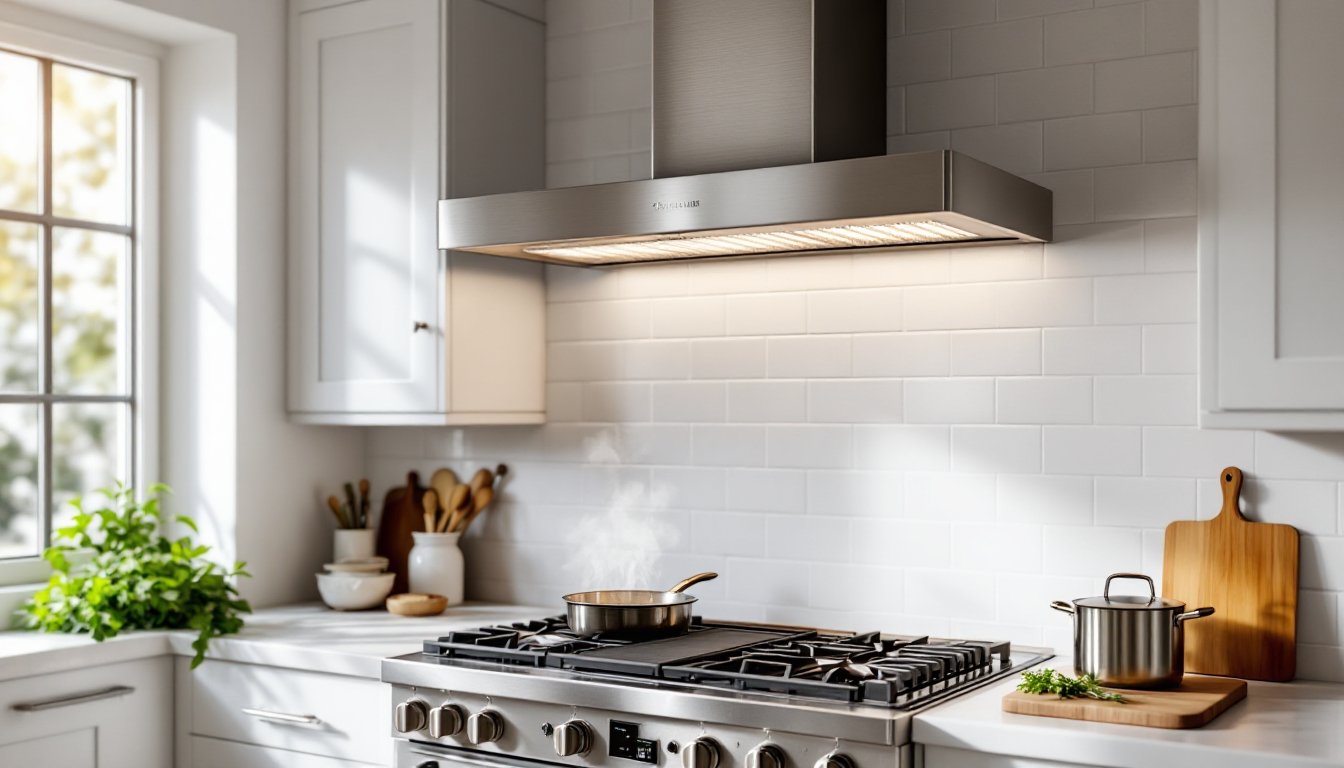
For a balance of performance, quietness, and build quality, wall-mount chimney hoods in the 400–600 CFM range from brands like Broan-NuTone, Cosmo, and ZLINE consistently deliver. These models typically feature stainless steel construction, three-speed blowers, and LED task lighting. They duct out the top or rear, fit standard 30- or 36-inch cooktops, and install with basic hand tools and a helper.
Expect to pay $300–$700 depending on finish and features. Higher-end units include touch controls, auto-shutoff timers, and quieter centrifugal blowers. The best hood range models in this category run under 4 sones at mid-speed and handle everything from simmering pasta sauce to wok stir-fries without breaking a sweat.
Best Budget-Friendly Option
Under-cabinet range hoods in the 250–400 CFM range offer solid ventilation without the premium price. Brands like Broan, GE, and Cosmo make non-ducted and ducted versions for $150–$300. These mount directly to the underside of a cabinet above the range, saving the cost and complexity of chimney extensions.
Look for models with removable aluminum mesh filters (dishwasher-safe), two-speed fans, and incandescent or LED lights. Performance is adequate for electric ranges and light gas cooking, but don’t expect them to keep up with a 60,000 BTU rangetop. Installation is straightforward: locate studs or cabinet framework, drill pilot holes, mount the bracket, wire it in (or plug it in if it’s a cord-and-plug model), and snap on the filters. Many homeowners find these easier to install than heavier chimney-style hoods, and practical renovation tips emphasize matching hood size to cooktop width to avoid undersizing.
Best for Heavy Cooking
If you’re running a high-BTU gas range, a commercial-style cooktop, or you sear, fry, and wok-cook regularly, step up to a 600–900 CFM ducted hood with a professional-grade blower. Brands like ZLINE, KitchenAid, and Hauslane make residential hoods with commercial performance. Expect stainless steel baffle filters, variable-speed controls, and heavy-duty centrifugal fans.
These hoods cost $600–$1,500+ and require 6-inch round or rectangular ductwork with as few elbows as possible, every 90-degree turn cuts airflow by roughly 25 CFM. Plan for a dedicated 15- or 20-amp circuit: high-CFM models draw significant power. Installation often benefits from a second set of hands due to weight (40–60 pounds) and the need to align ductwork precisely. Some jurisdictions require makeup air systems when exhaust exceeds 400 CFM to prevent backdrafting of furnaces or water heaters, check local building codes before buying.
Choosing the Right Range Hood Type for Your Kitchen
Under-cabinet hoods mount beneath a wall cabinet directly over the range. They’re the most common in standard kitchens, work with ducted or ductless setups, and don’t require custom cabinetry. Best fit: kitchens with upper cabinets flanking the cooktop and limited headroom.
Wall-mount chimney hoods attach to the wall and extend upward with a chimney or stack that hides the ductwork. They offer higher CFM ratings and make a design statement. Best fit: kitchens without upper cabinets over the range, modern or transitional styles, and cooktops against an exterior wall for easy venting.
Island hoods hang from the ceiling over a cooktop in an island or peninsula. They require ceiling joists strong enough to support the weight and ductwork routed through the ceiling and roof or exterior wall. Installation is more complex, expect to cut drywall, possibly add blocking between joists, and coordinate duct runs. Best fit: open-plan kitchens with island cooking zones and the budget for custom installation.
Insert or liner hoods are built into custom cabinetry or a decorative surround. The blower and filters sit inside a cabinet shell or wood hood: only the intake and lights are visible. These suit high-end custom kitchens but require coordination with a cabinetmaker. Best fit: integrated kitchen designs where the hood matches custom cabinetry.
Downdraft vents rise from the countertop or cooktop surface, pull air downward, and vent through the floor or rear wall. They’re a niche option for islands where overhead venting isn’t feasible, but they’re less effective at capturing heat and smoke that naturally rise. Performance rarely matches overhead hoods: consider them a last resort.
Key Features to Consider Before You Buy
CFM and cooktop width: Match the hood width to your cooktop or go wider. A 30-inch cooktop pairs with a 30- or 36-inch hood: a 36-inch range works with a 36- or 42-inch hood. Calculate minimum CFM by multiplying cooktop width in feet by 100 (e.g., a 3-foot range needs 300 CFM). Add more for gas ranges, especially high-BTU burners.
Ducted vs. ductless: Ducted hoods exhaust outdoors and remove grease, moisture, and odors permanently. Ductless models recirculate filtered air, acceptable for apartments or kitchens where ductwork isn’t possible, but filters need replacing every 3–6 months and performance lags. If you can duct, do it.
Duct size and routing: Most hoods use 6-inch round or 3.25 x 10-inch rectangular ducts. Smooth metal duct (galvanized steel or aluminum) beats flexible duct for airflow. Keep runs short (under 30 feet total equivalent length), minimize elbows, and terminate with a roof or wall cap with a backdraft damper. For planning kitchen ventilation layouts, shorter, straighter duct runs deliver the best performance.
Noise level: Sones measure sound. A rating of 1 sone equals roughly 40 decibels (a quiet library). Most range hoods run 3–7 sones. The best range hood brands engineer blowers and duct transitions to reduce turbulence and noise: internal or external (in-line) blowers can drop noise further but add cost and complexity.
Filters: Baffle filters (stainless steel slats) trap grease efficiently and go in the dishwasher. Mesh filters (layered aluminum) also clean easily but may not capture grease as well. Charcoal filters are for ductless models only and aren’t dishwasher-safe, budget for replacements.
Lighting: LED lights last longer, run cooler, and use less power than incandescent or halogen. Look for hoods with at least two bulbs to eliminate shadows over the cooktop.
Controls and extras: Push-button, slide, or touch controls are personal preference. Features like auto-shutoff timers, heat sensors, and variable-speed settings add convenience. Avoid gimmicks that don’t improve airflow or ease of cleaning.
Installation requirements: Confirm you have access to wall studs or ceiling joists rated to hold the hood’s weight. Wire it into a dedicated circuit (most hoods need 120V, 15A) or use a plug-and-cord setup if code allows. If installing a high-CFM hood (over 400 CFM) in a tightly sealed home, consult a pro about makeup air to prevent negative pressure issues. For broader guidance on home improvement best practices, professionals recommend planning ventilation early in any kitchen remodel to avoid costly rework.