

Table of Contents
ToggleFinding mouse droppings in the pantry or hearing scratching in the walls means it’s time to act. Setting a mouse trap isn’t complicated, but doing it right makes the difference between catching the intruder and wasting bait. Whether you’ve never touched a snap trap or just need a refresher on mouse trap setup, this guide walks through the entire process, from choosing the right trap to placing it where mice actually travel. No guesswork, no trial-and-error. Just practical mouse trap instructions that work the first time.
Key Takeaways
- Snap traps offer the best balance of cost, effectiveness, and humane dispatch for most homeowners dealing with mouse infestations.
- When setting a mouse trap, use a pea-sized amount of peanut butter on the trigger plate and avoid the myth of using cheese as bait.
- Position mouse traps perpendicular to walls with the trigger facing the baseboard, spacing them every 5-10 feet along active mouse routes for maximum effectiveness.
- Always wear disposable gloves when handling traps and baiting to prevent human scent from deterring mice and to avoid exposure to hantavirus and other pathogens.
- Set at least 6 traps initially since mice rarely travel alone, and check traps daily for proper disposal and sanitation to prevent odor and secondary pests.
- After catching a mouse, disinfect the trap area with a 10% bleach solution, and continue monitoring for 7-10 days after the last catch to confirm the infestation is resolved.
Choosing the Right Mouse Trap for Your Situation
Not all mouse traps are created equal, and the best choice depends on the size of the infestation, where the mice are active, and personal comfort with disposal.
Snap traps remain the most effective option for quick kills. The classic wood-base Victor trap works, but modern plastic versions with wider trigger plates catch mice more reliably. They’re reusable, inexpensive, and deliver instant results when set correctly.
Electronic traps use battery-powered shocks to kill mice without the mess of a snap. They cost more upfront, typically $20 to $40 per unit, but offer no-touch disposal. Good for squeamish homeowners or areas where kids and pets might encounter traps.
Live-catch traps capture mice unharmed for relocation. They require checking every few hours to avoid stressing or starving the animal, and you’ll need to release mice at least a mile away to prevent their return. Not ideal for large infestations.
Glue traps are controversial. They immobilize mice on sticky surfaces, but the animal often suffers for hours before dying. Many pest control professionals avoid them due to inhumane outcomes.
For most homeowners dealing with one to three mice, traditional snap traps offer the best balance of cost, effectiveness, and humane dispatch. Buy at least six traps, mice rarely travel alone, and multiple traps increase catch rates.
What You’ll Need Before Setting Your Trap
Gather everything before touching the trap. Mouse trap setup goes faster with the right materials at hand.
Materials:
- 4-6 snap traps (wooden or plastic)
- Bait: peanut butter, hazelnut spread, or a small piece of bacon
- Disposable gloves (latex or nitrile)
- Small plastic bags or grocery bags for disposal
- Flashlight for inspecting dark corners
- Paper towels or rags
Optional but useful:
- Small wooden craft stick or toothpick (for spreading sticky bait)
- Disinfectant spray (10% bleach solution or EPA-registered product)
- Notebook to track trap locations and catch rates
Safety gear: Wear gloves when handling traps, bait, and caught mice. Mouse droppings and urine can carry hantavirus, salmonella, and other pathogens. Avoid direct contact with any surfaces where mice have traveled.
Skip the cheese, it’s a myth. Peanut butter sticks to the trigger, forcing the mouse to work for the bait and increasing the chance of a clean catch. A dab the size of a pea is plenty.
Step-by-Step: How to Set a Traditional Snap Trap
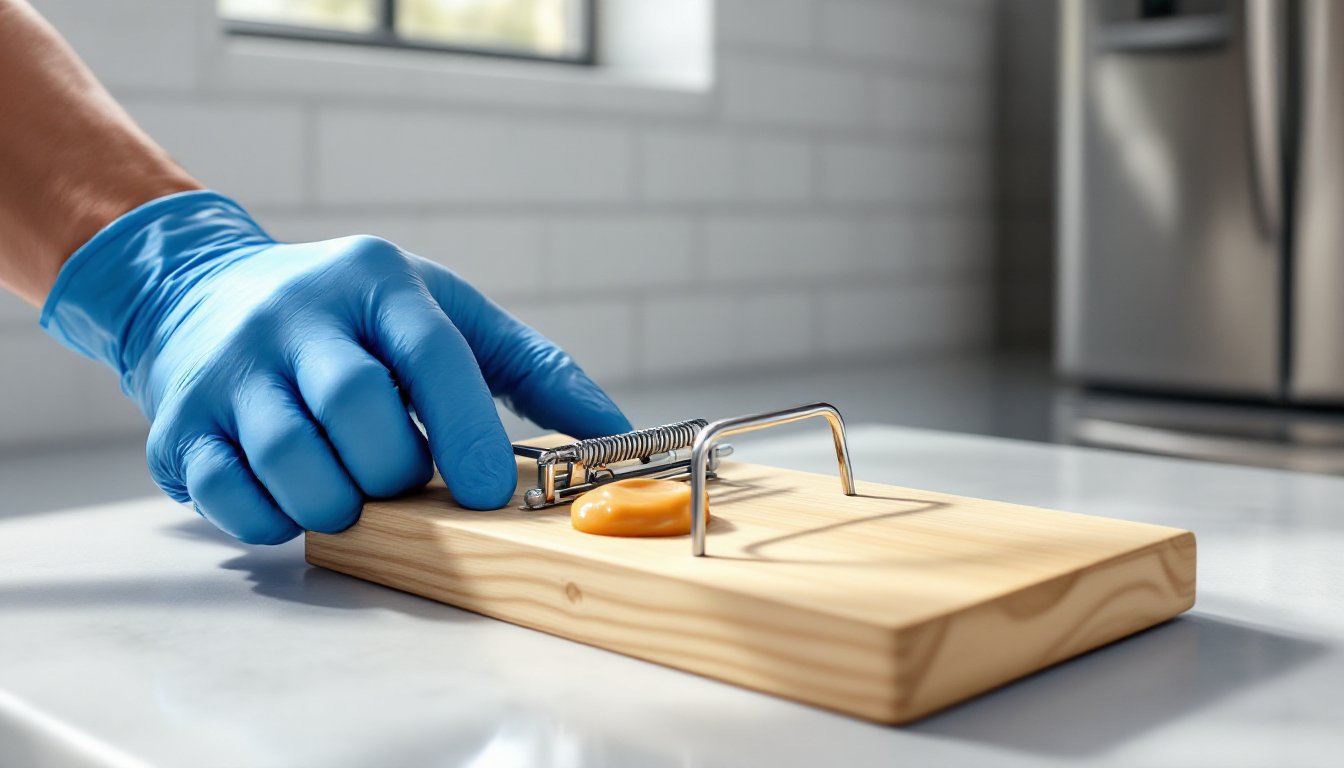
Learning how to set a mouse snap trap takes practice, but the process is straightforward once you understand the mechanics. Work on a flat surface like a kitchen counter or workbench, not on the floor.
Step 1: Apply the bait
Put on gloves. Place a pea-sized amount of peanut butter directly on the trigger plate or bait pedal. For wooden traps, you can also smear a tiny bit under the trigger to make the mouse work harder to reach it. Avoid overloading, too much bait lets the mouse lick it off without triggering the trap.
Step 2: Pull back the kill bar
Hold the trap base firmly with one hand. Use your other hand to pull the U-shaped metal kill bar all the way back until it touches the base opposite the trigger. Keep fingers clear of the trigger area.
Step 3: Set the hold-down bar
While holding the kill bar down, take the thin metal hold-down bar (the straight piece attached to the kill bar) and hook it under the trigger plate. The hold-down bar should rest in the small notch on the trigger. This is the trickiest part, the trap is now armed and sensitive.
Step 4: Test the sensitivity
Gently tap the edge of the trigger with a pencil or stick. The trap should snap immediately. If it doesn’t, the hold-down bar isn’t seated properly in the notch. Reset and try again.
Step 5: Place the trap
Carefully transport the armed trap to the target location. Hold it by the base, never near the kill bar. Position it perpendicular to the wall with the trigger end facing the baseboard, mice run along walls, not across open floors.
Many DIY project tutorials recommend setting multiple traps in high-traffic areas to improve your odds. One trap rarely cuts it when you’re dealing with an active mouse.
Pro tip: If the trap keeps snapping while you’re trying to set it, the spring tension may be too high for beginners. Plastic snap traps with yellow triggers and safety switches are more forgiving to set and just as lethal when tripped.
Where to Place Mouse Traps for Maximum Effectiveness
How you set a mouse trap matters, but where you set it matters more. Mice follow predictable paths driven by their need for food, water, and shelter.
Look for these signs of mouse activity:
- Dark, rice-sized droppings along baseboards and in cabinets
- Greasy rub marks on walls where fur has repeatedly touched
- Gnaw marks on food packaging, cardboard, or wood
- Scratching or scurrying sounds at night
Prime trap locations:
- Along walls and baseboards: Place traps perpendicular to the wall with the trigger end nearly touching the baseboard. Mice rarely venture into open floor space.
- Behind appliances: The warm, dark space behind refrigerators, stoves, and dishwashers is prime mouse real estate.
- Under sinks: Plumbing penetrations in cabinets offer easy access from wall voids.
- In attics and crawlspaces: Check insulation for tunnels and nesting material. Set traps along joists and near vent openings.
- Garage corners: Mice enter through gaps around overhead doors and nest in stored boxes.
Spacing: Set traps every 5-10 feet along active routes. Mice have small territories, 15 to 30 feet in diameter, so saturation coverage works better than single traps.
Avoid these spots:
- Middle of rooms (mice won’t cross open space)
- Near HVAC vents (air movement can blow away scent trails)
- High-traffic pet areas (risk of accidental snaps)
If you’re unsure where mice are traveling, sprinkle a light coating of flour or talcum powder along suspected routes and check for tracks after 24 hours. Modern home safety guides also recommend checking for entry points like gaps around utility lines, sealing those after trapping prevents future infestations.
Common Mistakes to Avoid When Setting Mouse Traps
Even experienced DIYers make errors that reduce trap effectiveness. Here’s what to skip.
Using too much bait: A big glob of peanut butter lets the mouse lick the edges without stepping on the trigger. A pea-sized dab forces contact.
Setting traps in the wrong orientation: Traps placed parallel to the wall or facing outward miss mice running the baseboard. Always position the trigger toward the wall.
Handling traps and bait with bare hands: Human scent can deter cautious mice. Wear gloves during the entire process, from baiting to placement.
Not setting enough traps: One or two traps won’t solve an active infestation. Mice reproduce quickly, a female can have 5-10 litters per year. Set multiple traps from day one.
Leaving traps unchecked: Snap traps kill quickly, but leaving a dead mouse in place for days creates odor and attracts secondary pests. Check traps daily.
Ignoring trap placement after misses: If a trap springs without a catch or bait disappears without triggering, the trap isn’t sensitive enough or positioned poorly. Adjust placement or switch to a different trap style.
Skipping sanitation: Traps work best when competing food sources are removed. Seal pantry goods in airtight containers, clean up crumbs, and fix leaky pipes. Mice won’t take bait if easier meals are available.
Some hands-on DIY tutorials suggest using wooden craft sticks to set traps without risking fingers, a smart move for anyone uncomfortable with the spring tension of traditional snap traps.
What to Do After Catching a Mouse
A sprung trap means the job’s half done. Proper disposal and sanitation prevent disease transmission and prepare the trap for reuse.
Step 1: Approach with gloves on
Never touch a dead mouse with bare hands. Put on disposable nitrile or latex gloves before handling the trap.
Step 2: Dispose of the mouse
For wooden traps, drop the entire trap and mouse into a plastic bag, seal it, and discard in an outdoor trash bin. Wooden traps are cheap enough to treat as single-use.
For reusable plastic traps, release the kill bar over a plastic bag, letting the mouse drop inside. Seal the bag and dispose of it immediately.
Step 3: Disinfect the area
Spray the trap placement area with a 10% bleach solution (1 part bleach to 9 parts water) or an EPA-registered disinfectant. Let it sit for five minutes, then wipe clean. This kills pathogens in urine and droppings.
Step 4: Clean and reset the trap
Rinse reusable traps with hot, soapy water. Scrub off any blood, fur, or debris. Let the trap air-dry, then re-bait and reset following the same mouse trap instructions outlined earlier.
Step 5: Monitor for additional activity
Keep traps set for at least two weeks after the last catch. If droppings stop appearing and no traps spring for 7-10 days, the infestation is likely resolved.
When to call a professional:
If you’re catching more than one mouse per day, finding nests with pups, or seeing mice in daylight (a sign of overcrowding), the problem may exceed DIY control. Licensed pest control operators have access to commercial-grade rodenticides and exclusion techniques that aren’t available at retail.
Conclusion
Knowing how to set a mouse trap correctly turns a frustrating problem into a manageable task. Bait sparingly, position traps along walls, and check them daily. Most infestations clear within a week when traps are placed strategically and in sufficient numbers. Once the traps stop catching, shift focus to sealing entry points, gaps around pipes, vents, and foundation cracks, to keep new mice from moving in. A little prevention goes further than a dozen traps.