
Table of Contents
ToggleChoosing the right wood for kitchen cabinets is one of the most consequential decisions in a kitchen remodel. Maple stands out not just for its clean looks and tight grain, but for its sheer physical toughness, it’s a hardwood that stands up to decades of door slams, heavy pots, and daily use. Unlike softer species that dent or scratch easily, maple wood kitchen cabinets hold their shape and finish through years of wear. Whether you’re after a sleek modern look or a warm transitional feel, maple offers the flexibility to work with nearly any design style while delivering the kind of durability that keeps your investment looking sharp long after installation.
Key Takeaways
- Maple kitchen cabinets rank among the hardest domestic hardwoods with a Janka rating of 1,450 for hard maple, making them exceptionally resistant to dents, scratches, and daily wear.
- Hard maple is ideal for high-end cabinetry while soft maple offers a budget-friendly alternative; both deliver superior dimensional stability with minimal expansion or contraction due to humidity changes.
- Light stains and natural finishes best showcase maple’s fine, uniform grain, while dark stains require wood conditioner and gel stain techniques to prevent blotchy absorption.
- Maple kitchen cabinets work beautifully in modern, transitional, Scandinavian, and craftsman styles, though painted finishes are better suited for farmhouse aesthetics.
- Daily maintenance with pH-neutral cleaners, immediate spill cleanup, and humidity control between 35–50% keep maple cabinets looking sharp for 20–30+ years of reliable service.
Why Maple Is a Top Choice for Kitchen Cabinets
Maple ranks as one of the hardest domestic hardwoods available, with a Janka hardness rating of 1,450 for hard maple (sugar maple). That puts it ahead of oak, cherry, and most other cabinet-grade species, making it exceptionally resistant to dents, scratches, and surface damage from everyday kitchen activity.
Beyond toughness, maple delivers a fine, uniform grain that takes finish evenly and minimizes blotching, a common issue with woods like cherry or pine. This makes it easier to achieve a consistent, professional-looking stain or paint job, whether you’re working with a pro or tackling cabinet refinishing yourself.
Maple is also widely available and cost-effective. Unlike exotic hardwoods that require special ordering or premium pricing, maple is harvested throughout North America and stocked by most cabinet manufacturers and lumber yards. This accessibility keeps costs reasonable while still delivering premium performance.
Finally, maple cabinets kitchen designs offer excellent dimensional stability. The wood expands and contracts minimally with humidity changes compared to softer species, which means fewer alignment issues with doors and drawers over time, a practical advantage in climates with seasonal moisture swings.
Types of Maple Wood and Grain Patterns
Two primary types of maple appear in cabinetry: hard maple (also called sugar maple or rock maple) and soft maple (including red maple and silver maple). Even though the name, soft maple is still harder than many other cabinet woods, it just rates about 950 on the Janka scale, roughly 30% softer than hard maple.
Hard maple is the standard for high-end kitchen cabinets. It machines cleanly, holds detail well for routed profiles and inset doors, and resists wear in high-traffic kitchens. Soft maple costs less and still performs well for painted cabinets or budget-conscious projects, but it’s more prone to denting from sharp impacts.
Maple grain patterns fall into two categories:
Straight grain is the most common. It features subtle, tight lines with minimal figure, perfect for modern maple kitchen cabinets where a clean, uncluttered look is the goal. This grain absorbs stain more evenly and is the go-to for contemporary and transitional styles.
Curly or figured maple displays wavy, three-dimensional patterns caused by irregular growth. This includes birdseye maple (small circular patterns resembling bird eyes) and flame maple (rippling waves across the board). These specialty cuts command premium pricing and are often reserved for focal points like islands or display cabinets rather than full kitchen runs. They’re stunning under clear finishes but can look busy if overused.
When ordering cabinets, ask whether you’re getting hard or soft maple and whether the face frames and door panels come from rift-sawn, plain-sawn, or quarter-sawn stock. Plain-sawn is standard and most affordable: quarter-sawn offers tighter grain and better stability but costs more.
Stain and Finish Options for Maple Cabinets
Maple’s tight, closed-grain structure affects how it accepts stain differently than open-pore woods like oak or ash. Without prep, stain can absorb unevenly and create blotchy patches, especially with oil-based stains. Understanding how to work with maple’s natural characteristics leads to better results.
Natural and Light Stains
Maple shines when finished natural or with light stains. A clear coat of polyurethane, conversion varnish, or water-based finish brings out the wood’s pale, creamy color and subtle grain without obscuring its clean appearance. This approach is ideal for modern light maple kitchen cabinets, Scandinavian-inspired designs, and kitchens aiming for an airy, open feel.
If you want slight warmth without going dark, use a pre-stain wood conditioner before applying a honey, amber, or wheat-tone stain. The conditioner seals the wood surface evenly and reduces blotching. Gel stains also work well on maple, they sit on the surface rather than soaking in, giving you more control over color depth and uniformity. Expect to apply two coats of stain for richer tones, with light sanding (220-grit) between coats.
For a contemporary look, many designers skip stain entirely and apply a matte or satin clear finish. This highlights maple’s natural color variation and gives kitchen with maple cabinets a minimalist, Scandinavian edge.
Dark and Medium Stains
Darker stains on maple require extra care. Maple’s density means pigment doesn’t penetrate deeply, so uneven absorption is common. To get a consistent espresso, walnut, or cherry tone:
- Sand to 180-grit. Going finer can close the grain too much and block stain absorption.
- Apply wood conditioner. Let it sit for 15 minutes, then wipe excess and wait 30 minutes before staining.
- Use gel stain or toner. These sit on the surface and build color in controllable layers. Apply thin coats and wipe evenly with the grain.
- Seal with a durable topcoat. Conversion varnish or catalyzed lacquer offers the best durability for kitchen cabinets: water-based polyurethane is a solid DIY alternative.
Medium tones, like cognac, chestnut, or medium walnut, offer a middle ground. They add warmth without the intensity of espresso and tend to show less wear over time. Professionals often use woodworking techniques that include toning or glazing to enhance depth on medium-stained maple.
Painted finishes also work beautifully on maple. The smooth, tight grain requires less filling than oak, and a quality bonding primer (like BIN shellac-based or STIX acrylic) ensures excellent adhesion. Use a paint sprayer or high-density foam roller for a factory-smooth finish, and cure painted cabinets for at least 72 hours before heavy use.
Design Styles That Work Best with Maple Cabinets
Maple’s versatility lets it anchor a wide range of kitchen styles, from cutting-edge contemporary to warm traditional, though some designs play to its strengths better than others.
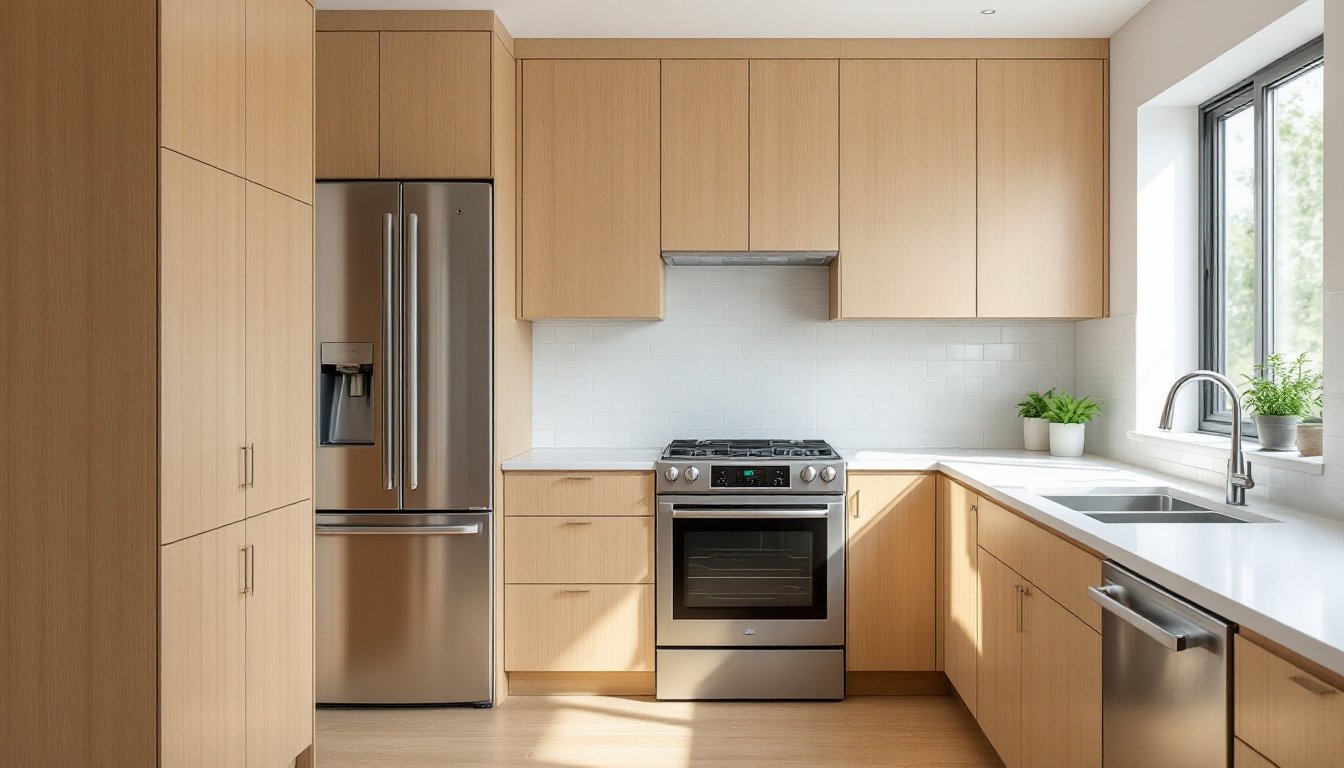
Modern and contemporary kitchens are a natural fit. Maple’s smooth grain and clean lines suit slab doors, flat-panel frames, and minimalist hardware. Pair natural or light-stained maple with quartz countertops, stainless steel appliances, and subway tile backsplashes for a cohesive, uncluttered look. Horizontal grain matching and seamless edge banding reinforce the sleek aesthetic.
Transitional kitchens benefit from maple’s neutral tone and adaptability. Shaker-style doors in a light or medium stain bridge the gap between traditional warmth and modern simplicity. Combine them with brushed nickel or matte black hardware, marble or granite counters, and classic subway or arabesque tile. This style remains one of the most popular kitchen design choices for resale value and timeless appeal.
Craftsman and Mission styles leverage maple’s durability and accept quartersawn cuts beautifully. Choose medium stains with a satin finish, and pair cabinets with stone countertops, apron-front sinks, and Prairie-style glass inserts. The wood’s strength supports the heavier door styles and inset construction typical of these designs.
Maple works less naturally in rustic or farmhouse kitchens that lean heavily on knotty, weathered character. If you’re committed to a farmhouse vibe, opt for painted maple cabinets in whites, soft grays, or sage greens rather than stained wood. The smooth grain still won’t deliver the same distressed charm as knotty alder or reclaimed pine, but paint levels the playing field.
Scandinavian and Nordic designs are where maple truly excels. Light natural finishes, open shelving accents, and pale color palettes make the most of maple’s bright, even tone. Pair with white or light gray walls, simple bar pulls, and natural fiber textures for an effortlessly modern look.
For design inspiration and curated examples of maple cabinets kitchen ideas in various styles, this collection of maple cabinet setups showcases manufacturer options and real-world applications across different aesthetics.
Caring for and Maintaining Maple Kitchen Cabinets
Maple’s hardness is an asset, but proper maintenance keeps cabinets looking sharp for decades. Most damage comes from neglect, harsh cleaners, or moisture exposure, not the wood itself.
Daily cleaning: Wipe down cabinet faces with a damp microfiber cloth and a few drops of dish soap in warm water. Avoid soaking the wood or leaving standing water on surfaces, especially near the sink. Dry immediately with a clean towel to prevent water spots and finish damage.
Avoid harsh chemicals. Ammonia-based cleaners, bleach, and abrasive scrubs can dull or strip the finish over time. Stick with pH-neutral wood cleaners or simple soap and water. For grease buildup, a solution of 1 part white vinegar to 2 parts water cuts through grime without harming the finish.
Address spills immediately. Maple is moisture-resistant, but prolonged exposure to water, juice, or acidic foods can penetrate a compromised finish and cause discoloration or warping. Wipe up spills as they happen, especially around handles and edges where finish wear is common.
Refinish high-wear areas. Cabinet doors near the stove, dishwasher, and sink take the most abuse. If the finish starts to look dull or sticky, lightly sand with 220-grit paper, clean with denatured alcohol, and apply a fresh topcoat of polyurethane or the original finish. This spot-refinishing extends cabinet life without a full kitchen overhaul.
Check and tighten hardware. Hinges and drawer slides loosen over time from repeated use. Inspect them every 6–12 months and tighten screws with a screwdriver. Replace worn soft-close mechanisms or stripped hinge cups before they damage the cabinet box.
Control humidity. Maple is dimensionally stable, but extreme swings in moisture can still cause minor expansion or contraction. Keep indoor humidity between 35–50% year-round using a dehumidifier in summer and a humidifier in winter if needed. This prevents door misalignment and finish cracking.
Protect from UV exposure. Direct sunlight can fade or yellow natural and light-stained maple over time. Use window treatments or UV-filtering film on windows that face cabinets, especially on south- or west-facing walls.
With consistent care and attention to moisture, maple cabinets deliver 20–30 years or more of reliable service, often outlasting the appliances and countertops around them. Their durability and timeless appeal make them a sound long-term investment for any kitchen remodel.